레이블이 Game_EN인 게시물을 표시합니다. 모든 게시물 표시

2026년 8월 9일 일요일

Nostalgic Precision vs. Generative Shadows: A Deep Analysis of 'ReStory: Chill Electronics Repairs'

Nostalgic Precision vs. Generative Shadows: A Deep Analysis of 'ReStory: Chill Electronics Repairs'

1. Introduction: Paradigm Shifts and Market Expectations

The contemporary simulation genre has undergone a profound paradigm shift, pivoting away from stress-inducing economic management toward tactile, granular execution loops that foster emotional tranquility. As exemplified by titles such as PowerWash Simulator and Car Mechanic Simulator, the mechanical romanticization of everyday labor has carved out a lucrative niche. Entering this arena is ReStory: Chill Electronics Repairs, a title explicitly engineered to capitalize on hardware nostalgia by inviting players to disassemble, repair, and restore iconic consumer electronics from the late 1990s and early 2000s—ranging from vintage Nokia feature phones to beloved handhelds like the PSP and home consoles like the PS1, SNES, and N64.

Prior to its release, expectations among the indie simulation community ran high. Players anticipated a comprehensive hardware archiving experience that balanced authentic component management with creative customization, such as custom painting and donor-part harvesting. However, upon technical evaluation, ReStory presents a fascinating dichotomy: a deeply engaging core mechanical loop set against systemic optimization flaws and controversies surrounding ethical asset production pipelines.

2. Gameplay Mechanics: Core Loop Architecture and Tactile Precision

The Core Gameplay Loop of ReStory revolves around a structured diagnostic and restoration pipeline: diagnostic intake, systematic disassembly, component cleaning, fault replacement, reassembly, and external cosmetic customization. Unlike casual titles that rely on simplified point-and-click interactions, ReStory introduces authentic layered disassembly architectures. Players must unfasten individual chassis screws, disconnect fragile ribbon cables, blow away internal dust accumulation, and reapply thermal paste to restored chips. A standout mechanic within this progression framework is the secondary market resource acquisition system, which allows players to purchase worn donor units to harvest functional components—adding a satisfying layer of resource efficiency to the gameplay.

The game's Progression System is equally robust, rewarding players with upgraded precision tools that streamline tedious macro-operations and enhance overall efficiency. This rhythm creates a potent flow state where hours dissipate unnoticed. However, mechanical friction is present. The inclusion of rudimentary quick-time events—such as mash-heavy hacking minigames—breaks the meditative immersion and feels misaligned with the game's core identity. Additionally, sudden difficulty spikes during complex repairs (such as multi-layered laptop architectures) contrast sharply with the otherwise relaxing atmosphere. Furthermore, a distinct UX/UI Bottleneck emerges within the cosmetic sticker organization interface, which lacks fundamental sorting parameters and interrupts creative flow.

3. Visual Architecture, Soundscape, and Optimization Engineering

From an audio-visual perspective, ReStory delivers a well-crafted atmospheric baseline true to its namesake. Sound design plays a pivotal role in maintaining immersion: tactile metallic clicks of unscrewing bolts, soft plastic snaps, and brushing textures are accompanied by a calming Lo-Fi audio backdrop. The 3D component renders accurately mimic real-world hardware metallurgy and PCB layouts, providing high visual fidelity during intimate repair operations.

Regrettably, significant flaws emerge upon analyzing its Technical Optimization Engineering. Despite its unassuming visual fidelity, anomalous CPU and GPU resource spikes have been documented across midrange hardware configurations, indicating unoptimized background draw calls or memory leaks. More critically, controversy surrounds the visual architecture due to the apparent integration of uncredited Generative AI assets within environmental textures—manifested as garbled signage, nonsensical object placements, and anatomical inconsistencies in background art. The developer's opaque handling of community inquiries regarding these assets has cast a noticeable shadow over the title's production integrity.

4. Global Community Sentiment and Final Verdict

Synthesis of global player feedback reveals a polarized reception. On one hand, players celebrate the therapeutic nostalgia, praised tactile mechanical depth, and seamless loop of harvesting vintage donor components. The core restoration gameplay successfully delivers on its promise of an engrossing, low-stress simulation that absorbs the player's focus entirely.

On the other hand, a vocal segment of the community highlights significant grievances regarding the lack of transparency surrounding Generative AI assets, heavy-handed moderation of forum discussions, and technical optimization flaws relative to the game's hardware footprint. In conclusion, ReStory: Chill Electronics Repairs stands as a highly engaging, mechanically sound hardware restoration simulator hampered by ethical controversies and minor interface frictions. While it offers immense satisfaction to retro hardware enthusiasts, its technical execution requires further refinement.

Final Score: 7.2 / 10 ("A deeply satisfying tactile restoration loop shadowed by procedural controversies.")


👉 View on Steam

2026년 8월 8일 토요일

[SOLAR82 COVER CRITIQUE] Unhinged Physics Meets Dark Social Dynamics: How 'Machine Party' Subverts the Party Game Paradigm

[SOLAR82 COVER CRITIQUE] Unhinged Physics Meets Dark Social Dynamics: How 'Machine Party' Subverts the Party Game Paradigm

1. Introduction: Epochal Paradigm and Market Expectations

The multiplayer party game market has undergone a profound structural paradigm shift in recent years. While conventional mainstays of the genre traditionally relied on benign board game loops, rigid turns, and family-friendly mini-games, modern gamers increasingly demand chaotic physical sandbox mechanics, high-stakes griefing, and edgy humor. Entering this dynamic landscape is Machine Party, a title that aggressively rejects wholesome design tropes in favor of unhinged social friction, absurd dark comedy, and high-volatility physics-based gameplay. Positioned by community sentiment as an uncompromising 'friendship killer,' the title has rapidly gained traction among players seeking dynamic, unscripted hilarity. This critique evaluates whether Machine Party successfully establishes a sustainable meta-game architecture or merely relies on ephemeral shock value.

2. Gameplay Mechanics: Core Loop and Proof of Originality

At the center of Machine Party is a tightly paced Core Gameplay Loop anchored by fast reaction times, high-risk survival challenges, and constant physical intervention. Mini-games move away from traditional arcade tasks, plunging players into dark, high-tension micro-scenarios—such as smoking a cigarette before a countdown expires under threat of instant execution, or attempting to consume food while staving off physical assaults from opponents. The inclusion of an explicit physical pushing and disruption mechanic transforms every arena into a chaotic psychological battlefield. Rather than competing solely against environmental hazards, players actively sabotage opponent trajectories, creating emergent gameplay moments that drive intense social engagement.

However, key mechanical bottlenecks persist. The current architecture lacks essential custom game toggles, such as options to randomize challenge sequences, disable specific minigames, or turn off pushing mechanics for tailored casual play. Expanding these customizable constraints is crucial for ensuring long-term replay value beyond initial party sessions.

3. Visual Architecture, Soundscape, and Optimization Engineering

From a rendering and visual hierarchy standpoint, Machine Party adopts a clean, stylized art direction that prioritizes high readability amid chaotic multiplayer action. The physics engine drives much of the visual comedy; exaggerated ragdoll physics and responsive impact animations turn every collision or ledge drop into a moment of slapstick entertainment. By eschewing overly complex shaders and dense environmental clutter, the visual pipeline maintains clarity even during four-player dynamic melees.

The audio landscape complements this aesthetic through punchy, tactile sound effects and an upbeat yet tense musical score that amplifies urgency during timed countdowns. Mechanically, the client optimization is solid across mid-spec hardware configurations, though minor engine bugs and client-side interpolation stutters occasionally surface during heavy physics overlaps. Addressing these netcode sync hiccups and refining collision boundaries will be essential to elevating the game's competitive precision.

4. Global User Sentiment Analysis and Final Master Rating

An aggregate analysis of global user feedback demonstrates an overwhelmingly positive reception balanced by clear quality-of-life demands. Western and international communities frequently characterize the game as an unhinged, degenerate iteration of classic party formulas, praising its sheer entertainment value, black humor, and friendship-testing physics. Simultaneously, players highlight structural shortcomings: the current lack of public matchmaking lobbies severely limits solo queue accessibility, forcing players to rely entirely on private friend groups.

Furthermore, community demand is strong for continuous minigame expansion and modular game rules. In summary, Machine Party succeeds brilliantly as an edgy, physics-driven party title that breathes fresh life into a predictable genre. With ongoing content updates and expanded matchmaking infrastructure, it stands poised to become a staple in the party action canon.


👉 View on Steam

2026년 8월 7일 금요일

An Industrial Symphony of Iron and Steel: 'IRON NEST: Heavy Turret Simulator' Critique

An Industrial Symphony of Iron and Steel: 'IRON NEST: Heavy Turret Simulator' Critique

1. Introduction: Historical Paradigm and Market Expectations

In a contemporary gaming landscape increasingly dominated by automated mechanics, simplified control schemes, and user-friendly interaction loops, the hardcore simulation sub-genre has often found itself at a crossroads. While casualization expands market reach, it frequently alienates enthusiasts demanding authentic mechanical friction, tactile depth, and structural realism. Enter 'IRON NEST: Heavy Turret Simulator', a title that intentionally rejects modern convenience in favor of uncompromising, meticulous mechanical immersion inside a massive armored turret installation.

Ever since its initial showcase during Steam Next Fest, the title generated intense anticipation among niche simulator communities and military hardware aficionados. Players longed for an experience that transcended standard vehicle action games, seeking instead a hyper-focused, claustrophobic operational exercise. 'IRON NEST' promised not merely to simulate firing an artillery piece, but to recreate the holistic sensory and physical burden of operating a complex industrial machine under pressure. The developer's commitment to raw analog mechanics established high expectations long before its official release.


2. Gameplay Mechanics: Core Loop and Mechanical Ingenuity

At its core, 'IRON NEST' dismantles the ubiquitous 'press button to reload' trope popularized by conventional action titles. Instead, it constructs an intricate multi-tiered core gameplay loop centered on manual mechanical execution. The player is placed within the dense, mechanical heart of a heavy artillery turret, tasked with navigating physical levers, pressure valves, handwheels, breech blocks, and optical calibration tools to complete target engagement missions.

This mechanical architecture forces the player into a rhythmic, deeply satisfying flow state. To load a single shell, one must open the breech, manually manipulate loading trays, ram the heavy projectile, seat the propellant charge, prime the ignition, and monitor hydraulic pressure systems while making precise elevation adjustments via manual hand cranks. The risk of mechanical jam, thermal buildup, and structural failure adds layers of tactical friction to every engagement. This relentless commitment to procedural fidelity elevates 'IRON NEST' beyond simple entertainment, converting mechanical routine into a thrilling exercise in operational mastery.


3. Visual Architecture, Soundscape, and Technical Engineering

Visually, the game excels through its rigorous industrial design language and tactile environmental art. The interior of the turret is rendered with painstaking fidelity: worn metallic edges, chipped industrial paint, vibrating analog gauges, and greasy hydraulic pistons create a claustrophobic yet captivating workspace. Ray-traced dynamic lighting captures the stark contrast between the dim, red-lit interior control room and the blinding muzzle flashes penetrating the observation slits.

However, the audio engine represents the game's true masterclass in engineering. The audio design communicates precise physical interactions: the high-pitched whine of stressed hydraulic pumps, the metallic clatter of heavy steel catches, and the bone-rattling bass shockwave of primary discharges. Every physical manipulation yields distinct acoustic feedback that informs the player of the machine's state without relying on invasive HUD elements. From a technical standpoint, frame stability remains rock-solid even during intense particle rendering and dynamic smoke simulation inside the enclosed space.


4. Global Community Sentiment and Final Verdict

Global player sentiment reflects overwhelming acclaim for the title's uncompromising vision. Reviewers across various regions praise the game for its hyper-tactile design, often referring to it as the ultimate sanctuary for enthusiasts who crave deep mechanical interaction and process-driven gameplay. The addition of thoughtful localizations, including Ukrainian, further demonstrates the developers' dedication to their passionate international audience.

Ultimately, 'IRON NEST: Heavy Turret Simulator' stands as a triumph of mechanical design and focused creative execution. By rejecting casual accessibility and honoring the tactile complexity of heavy industrial warfare, the developers have crafted a definitive, highly immersive masterpiece that sets a new benchmark for niche simulation experiences.


👉 View on Steam

2026년 8월 6일 목요일

Flawless Mechanics Shackled by Engineering Turmoil: 'MARVEL Tōkon: Fighting Souls' Critical Review

Flawless Mechanics Shackled by Engineering Turmoil: 'MARVEL Tōkon: Fighting Souls' Critical Review

1. Introduction: Market Expectations and Genre Paradigm

The convergence of Marvel's legendary intellectual property with high-density 2D/3D versus fighting game (FTG) mechanics has historically served as a catalyst for intense excitement within the global gaming landscape. 'MARVEL Tōkon: Fighting Souls' entered the market bearing the colossal responsibility of revitalizing the anime-style tag-team fighting genre, evoking memories of legendary tag fighters while forging its own contemporary identity. Intended to bridge the gap between casual comic book enthusiasts and battle-hardened competitive esports professionals, the title promised a sophisticated mechanical framework combined with high-fidelity visual presentation. The central thesis behind its development was to resolve the age-old genre paradox: lowering the execution barrier for newcomers without sacrificing the astronomical skill ceiling demanded by frame-data purists. However, despite its ambitious game design architecture and initial momentum, the game's actual commercial release has degenerated into a contentious battleground dominated by severe engineering mishaps and friction-heavy platform policies.

2. Gameplay Architecture: Core Loop and Technical Depth

From a mechanical design perspective, 'MARVEL Tōkon: Fighting Souls' stands as a masterclass in modern fighting game design. The core gameplay loop revolves around frame-precise neutral interactions, intricate resource management, and a dynamic combo extension system designated as the 'FlexStrike' mechanic. A deeper dive into the system architecture reveals startup windows calibrated around 26-frame startup animations, yielding tight, highly responsive blockstrings and intricate push-block dynamics. To accommodate varying player dexterity levels, the control mapping natively supports both classical quarter-circle Motion Inputs and a streamlined Quick Special system, operating harmoniously with built-in SOCD (Simultaneous Opposite Cardinal Direction) protocols tailored for modern leverless controllers and arcade sticks alike. Hitbox fidelity and hurtbox scaling exhibit exceptional mathematical precision, delivering satisfying tactical feedback during aerial counter-hits and multi-character tag assists. Regrettably, while this combat framework demonstrates elite-tier design philosophy, its mechanical brilliance is dramatically overshadowed by the technical instability of the executable client hosting it.

3. Visual Rendering, Soundscape, and Optimization Bottlenecks

Aesthetically, the title utilizes a striking cel-shaded rendering pipeline that seamlessly translates comic book line-art into vibrant three-dimensional motion. Dynamic camera sweeps during high-damage super moves, paired with an evocative, multi-layered acoustic soundscape, create an immersive spectator experience that honors its source material. Yet, this visual brilliance is utterly undermined by a catastrophic lack of technical optimization and stability on PC platforms. Critical runtime defects cause the game executable to crash to the desktop within 30 seconds of reaching the main menu—an issue entirely unresolvable via traditional file verification or clean reinstalls, pointing toward severe memory allocation flaws and engine backend corruption. Furthermore, the development team's failure to enable Linux and Steam Deck compatibility represents an unforced error; enabling Easy Anti-Cheat (EAC) Proton integration requires minimal developer intervention, yet handheld PC users remain entirely locked out. Compounding this technical neglect is the mandatory PlayStation Network (PSN) account integration, creating an artificial, high-friction user experience bottleneck that actively repels the PC enthusiast demographic.

4. Global Community Sentiment and Final Verdict

An exhaustive synthesis of global user telemetry and community feedback reveals a starkly polarized consensus regarding 'MARVEL Tōkon: Fighting Souls'. While fighting game purists actively praise the intricate combo scaling, precise input buffering, and deep tactical neutral game, the overwhelming majority of public discourse is dominated by frustration over severe software engineering failures. Constant client crashes, unoptimized backend pipelines, complete neglect of Proton/Linux compatibility, and forced account linking have generated widespread backlash, effectively drowning out the game's mechanical merits under a sea of negative sentiment. Ultimately, 'MARVEL Tōkon: Fighting Souls' is a tragic masterpiece: a structurally brilliant tag-team fighter entombed within an unacceptable PC port and anti-consumer publishing decisions. Unless the developers deploy immediate emergency hotfixes addressing runtime crashes, activate Proton anti-cheat support, and relax intrusive platform requirements, the game's mechanical brilliance will remain inaccessible to the very community it was engineered to captivate.


👉 View on Steam

2026년 8월 5일 수요일

Big Walk Critical Review: House House’s Social Physics Masterclass Hindered by Audio UX Bottlenecks

Big Walk Critical Review: House House's Social Physics Masterclass

1. Introduction: Market Expectations and Paradigm Shift

House House, the acclaimed indie studio behind the global phenomenon Untitled Goose Game, has returned with its highly anticipated multiplayer follow-up, Big Walk. Where their previous hit relied on chaotic single-player sandbox interactions against responsive NPC environments, Big Walk significantly expands its horizon into multi-user cooperative exploration set within a sprawling, uncharted bushland island.

Prior to release, the gaming industry anticipated Big Walk as a potential boundary-pushing evolution of asynchronous information sharing and proximity-based navigation. Rather than designing co-op merely for task efficiency, House House engineered a gameplay loop where miscommunication, spatial disorientation, and physical shenanigans naturally synthesize into rewarding, emergent narrative beats.


2. Gameplay Architecture: Core Loop and Mechanical Ingenuity

The fundamental core loop of Big Walk revolves around collective spatial navigation, non-verbal puzzle solving, and physical traversal. Players are dropped into a dense terrain featuring elevation shifts, obscured lines of sight, and expansive biomes. Without invasive HUD elements or ubiquitous waypoints, the game forces players to rely entirely on tangible, diegetic tools such as compasses, binoculars, radios, and flare guns.

The mechanical implementation of these traversal tools showcases sophisticated game design. For instance, firing a flare gun provides crucial visual signaling across long distances, yet simultaneously casts an overwhelming color tint over the environment. This dual-purpose mechanic creates hilarious, player-driven friction—a design philosophy reminiscent of a hybrid between Death Stranding's terrain navigation and Peak's chaotic social dynamics. The physics-driven interaction system encourages organic teamwork, making every journey feel distinct and unscripted.


3. Visual Architecture, Soundscape, and Technical Optimization

Visually, Big Walk adopts a refined, minimalist low-poly art direction paired with soft natural lighting and highly expressive character rigging. By paring back photorealistic complexity, the rendering engine maintains impeccable frame pacing and system performance even during large-scale open terrain rendering. The aesthetic presentation successfully evokes a sense of tranquil immersion and comedic camaraderie.

However, the title suffers from a major engineering and design flaw within its audio architecture. In a title where voice proximity chat is the cornerstone of the experience, the current audio pipeline lacks independent volume sliders for game audio (BGM/SFX) versus microphone/voice channels. This primitive UX bottleneck forces players to struggle with muffled team communication or overwhelmed ambient noise. Furthermore, output gain levels are notably muted, severely undermining the spatial audio immersion that the developer intended to cultivate.


4. Global Community Sentiment & Final Verdict

Global player sentiment reflects a sharp divide between praise for core game mechanics and frustration over interface shortcomings. Players universally laud the hilarious group dynamics, praising the sandbox freedom and inventive communication tools—such as hoarding flare guns to alter environmental atmospheres. The collaborative puzzle design is widely recognized as a triumph of casual social play.

Conversely, negative critique is dominated by vocal dissatisfaction regarding sound options. The absence of multi-track audio sliders and poor voice balancing are consistently cited as primary immersion breakers. While the developers have acknowledged these technical oversights and promised swift post-launch patches, the initial release remains compromised by these missing quality-of-life options.

In summary, Big Walk is a brilliant, inventive co-op adventure that successfully reinvents social navigation. Once the critical audio UI patches are deployed, it will undeniably stand as one of the finest, most charming cooperative titles of the generation.


Final Score: 8.0 / 10


👉 View on Steam

2026년 8월 4일 화요일

Melodic Shadows and Addictive Management Architecture: A Definitive Review of 'Village in the Shade'

Melodic Shadows and Addictive Management Architecture: A Definitive Review of 'Village in the Shade'

1. Introduction: Market Expectations and Paradigm Context

In the contemporary indie gaming landscape, the fusion of somber aesthetic direction with intricate simulation and management mechanics has emerged as a profoundly compelling sub-genre. Titles such as Cult of the Lamb have demonstrated that pairing dark, uncanny thematic motifs with tight resource-management feedback loops can create extraordinary player engagement. Entering this competitive arena is Village in the Shade, a title that captured significant community anticipation prior to its launch by promising a hauntingly atmosphere-driven experience anchored in village infrastructure development and narrative exploration. Developed with an emphasis on artistic contrast and mechanical depth, the game sets out to prove that its shadowy world holds far more than mere visual novelty.

2. Gameplay Architecture: Core Loops and Innovation Analysis

At its technical foundation, the core gameplay loop of Village in the Shade is engineered around a tripartite system: resource extraction, structural expansion, and villager population management. Players are thrust into an unforgiving environment where micro-managing production pipelines and macro-balancing community stability are paramount to survival. The progression curve is meticulously calibrated; every technological milestone introduces new logistical demands while imposing strict operational constraints. This precise mechanical design creates an intensely immersive 'just one more cycle' phenomenon, frequently mirrored in player sentiment where hours evaporate unnoticed during extended play sessions. However, as players transition into the late-stage meta-game, certain automation bottlenecks and repetitive maintenance routines begin to surface, revealing subtle pacing friction within an otherwise highly polished mechanical framework.

3. Visual Architecture, Soundscape, and Technical Optimization

From an audio-visual engineering standpoint, Village in the Shade achieves a remarkable level of artistic coherence. The game's soundtrack and ambient soundscape serve as a masterclass in atmospheric direction—an element heavily lauded across international user feedback. The haunting musical compositions do not merely accompany the gameplay; they actively dictate the psychological pacing and narrative tension of the experience. Graphically, the clever utilization of high-contrast shadow work and silhouette rendering grants the title a distinct visual identity while minimizing visual clutter. On the technical optimization front, testing on portable handheld UMPC architectures—specifically the Steam Deck—demonstrates commendable memory efficiency, maintaining a stable footprint around 10GB at native 800p resolution. Nevertheless, technical stability is hindered by occasional frame-pacing stuttering and a cluster of interaction and NPC pathfinding bugs that require prompt patch interventions from the engineering team.

4. Global Sentiment Analysis and Final Verdict

Synthesizing global community sentiment reveals an overwhelmingly positive reception centered around the game's hypnotic immersion, stellar BGM quality, and addictive management gameplay loop. Gamers consistently celebrate its capacity to dominate their daily schedules through compelling progression. Conversely, negative critiques correctly point toward day-one technical anomalies, including quest script freezes and minor mechanical bugs that temporarily disrupt the flow of play. Ultimately, despite these early launch hiccups, Village in the Shade stands as a brilliantly atmospheric, deeply engaging simulation that successfully merges acoustic excellence with tight system design.

Final Master Score: 8.2 / 10


👉 View on Steam

2026년 8월 3일 월요일

Savage Evolution in the Cycle of Death: An In-Depth Review of 'Beast of Reincarnation'

Savage Evolution in the Cycle of Death: An In-Depth Review of 'Beast of Reincarnation'

1. Introduction: Industry Context & Genre Expectations

In the contemporary landscape of action RPGs and dark fantasy rogue-lites, establishing a distinct identity requires more than atmospheric world-building; it demands a rigorous mechanical architecture that justifies every cycle of defeat and rebirth. 'Beast of Reincarnation' enters this highly competitive arena with a bold premise: turning player mortality into a dynamic engine of physical and tactical mutation. Positioned at the intersection of unforgiving Soulslike combat and adaptive character progression, the title generated substantial anticipation among hardcore action enthusiasts eager for a fresh take on high-stakes combat mechanics. Rather than treating death as a mere restart penalty, the developers designed a systemic framework where demise acts as the ultimate catalyst for mechanical evolution.


2. Gameplay Mechanics: Core Loop & Systemic Innovation

The core gameplay loop of 'Beast of Reincarnation' revolves around a tightly wound cycle: tactical exploration, high-intensity engagement, inevitable death, and subsequent 'Bestial Reincarnation.' Upon defeat, the player forfeits human stability to undergo a dynamic mutation process. This transformation reshapes the avatar into distinct feral forms, fundamentally altering the underlying combat metrics. It is not merely a quantitative bump in raw stats; it recalibrates animation priority, frame-perfect dodge windows, stamina consumption profiles, and weapon reach.

At its mechanical heart, the combat relies on precise stamina management, posture-breaking parry windows, and high-risk resource harvesting. Transitioning into a beast form unleashes devastating melee bursts and lifesteal capabilities, yet exposes the player to heightened damage intake, creating a high-strung risk-reward equilibrium. Boss encounters are structured with intricate attack telegraphing that tests spatial awareness and reflex timing. However, this mechanical brilliance is occasionally undermined by subtle hitbox misalignments and restrictive camera collisions in tight interior level architectures, which can introduce moments of artificial frustration rather than skill-based challenge.


3. Visual Architecture, Soundscape & Technical Optimization

Visually, the game achieves a compelling dark gothic aesthetic through high-density texturing, volumetric fog, and sophisticated dynamic lighting models. The spatial architecture of the game world utilizes verticality and interconnected shortcuts, evoking a palpable sense of claustrophobia and discovery. Complementing the visual fidelity is an exceptional audio engine. Combat feedback is amplified by heavy, tactile impact sounds, while spatial audio cues provide critical telemetry regarding enemy placements and off-screen attack animations.

Conversely, the engineering performance reveals technical bottlenecks that hinder the overall experience. During particle-heavy encounters featuring multi-stage boss phase transitions, frame pacing instability and micro-stuttering become noticeable. Optimization across mid-tier GPU setups demonstrates uneven VRAM allocation and shader compilation hiccups. These technical flaws occasionally impede frame-precise inputs, making engine-level optimization a paramount priority for post-launch maintenance.


4. Global Community Sentiment & Final Verdict

Community feedback highlights a stark divide between hardcore purists and general action gamers. Enthusiasts praise the mechanical granularity of the mutation system, the satisfying audio-visual weight of combat, and the uncompromising boss encounters. Conversely, critical reviews point toward steep learning curves, punishing death penalties, and sporadic performance drops as primary points of friction that alienate less experienced players.

In summary, 'Beast of Reincarnation' is a fiercely ambitious title that successfully executes a unique fusion of mortality-driven progression and visceral combat design. While technical optimizations and camera polish remain somewhat unrefined, its core ludic loop delivers an intoxicating blend of brutality and mastery. For those seeking an uncompromising challenge wrapped in a macabre evolutionary nightmare, it stands as a memorable addition to the genre.

Final Master Score: 8.2 / 10


👉 View on Steam

2026년 8월 2일 일요일

Elegiac Decay and Ultimate Survival Architecture: 'Project Zomboid' Deep Review

Project Zomboid Deep Review

1. Introduction: Industry Paradigm and Market Expectations

Developed by The Indie Stone, Project Zomboid stands as a monumental milestone that fundamentally redefines the post-apocalyptic survival subgenre. Originating from its early alpha days in 2011 and navigating through more than a decade of meticulous early access evolution, the title boldly deconstructs the power-fantasy framework prevalent in contemporary zombie action shooters. Set against the backdrop of 1993 Knox County, Kentucky, the game rejects heroic escapism in favor of an uncompromising, hyper-realistic survival simulation. Its legendary opening thesis—"This is How You Died"—is not merely thematic flavor text, but an overarching mechanical rulebook that governs every single design decision within the game. Rejecting casualization, Project Zomboid presents the absolute zenith of sandbox survival design.

2. Gameplay Mechanics: Core Loop and Proof of Originality

The core gameplay loop of Project Zomboid follows a punishing progression continuum: Spawn, Scavenge, Fortify, Collapse, and Inevitable Death. The brilliance of its mechanics stems from a granular health and psychological status engine known as 'Moodles.' Players are forced to balance caloric intake, body temperature regulation, wound disinfection, physical endurance, depression, and claustrophobia. These dynamic variables interact continuously to dictate character capabilities and mobility.

Despite utilizing a 2D/3D hybrid isometric perspective, the title integrates a strictly enforced Line-of-Sight (LOS) cone and dynamic Fog of War system that limits player awareness. Opening a seemingly safe door transforms into a high-stakes risk evaluation. The infamous emergent scenarios widely cited by the community—such as barging into a residential bathroom only to be ambushed by an enclosed horde, or triggering a house alarm that draws hundreds of infected—are organic fruits of brilliant systemic interactions between tile architecture and ambient AI hearing radius. Coupled with intricate meta-game skills such as electrical wiring, vehicle mechanics, tailoring, and farming, the game instills a profound sense of intrinsic reward without relying on scripted, artificial handouts.

3. Visual Architecture, Soundscape, and Optimization Engineering

From an engine architectural standpoint, Project Zomboid relies on a specialized tile-based isometric rendering system. Following the landmark Build 41 overhaul, the graphic pipeline received substantial enhancements, incorporating fluid skeletal animations, dynamic clothing wear-and-tear, and modernized texture shaders. Environmental atmospheric rendering—spanning torrential downpours, thick morning fogs, and seasonal shifts—evokes a grim, melancholic aesthetic that brings the abandoned streets of Kentucky to vivid life.

The audio architecture is equally crucial to survival. The tension is orchestrated through a stark contrast between eerie orchestral string swells and absolute environmental silence. The dynamic sound propagation engine accurately calculates acoustic occlusion through walls and windows, warning players of approaching threats through subtle footfalls or terrifying window-bashing. The sudden jump-scare screech that fires upon unexpected zombie sight-lines is surgically engineered to trigger immediate physiological tension. While the underlying Java runtime environment occasionally hits CPU thread bottlenecks during high-density horde migrations, the game's stellar Steam Workshop integration and modular modding framework allow the community to continually patch, expand, and revolutionize its longevity.

4. Global Community Sentiment and Final Verdict

Synthesis of global player feedback reveals an extraordinarily loyal player base united by shared trauma and dark humor. While initial sentiment frequently touches upon the steep learning curve, unforgiving User Experience (UX), and sudden fatal missteps, the overwhelming consensus celebrates these punitive mechanics as essential virtues. The persistent cycle of losing a heavily invested multi-month survivor to a single careless bite forces a deep meta-analytical learning loop, turning defeat into the ultimate catalyst for mastery.

In summary, Project Zomboid is a masterwork of systemic design that defies modern AAA tendencies toward player hand-holding. By elevating the dread of an apocalypse into an intricately woven sandbox simulation, The Indie Stone has crafted an endlessly replayable masterpiece where every demise tells a unique, tragic narrative.

Final Master Score: 9.3 / 10 (ESSENTIAL)


👉 View on Steam

2026년 8월 1일 토요일

Definitive Mechanics of Superhero Action: A Deep Technical Analysis of Marvel’s Spider-Man Remastered

Definitive Mechanics of Superhero Action: A Deep Technical Analysis of Marvel’s Spider-Man Remastered

1. Introduction: Industry Paradigm and Market Expectations

For years, open-world superhero adaptations operated under the formidable shadow cast by Rocksteady’s Batman: Arkham framework. Insomniac Games, alongside PC conversion specialist Nixxes Software, fundamentally redefined this spatial and interactive standard with Marvel’s Spider-Man Remastered. Originally conceived as a PlayStation flagship, its arrival on the PC platform represents more than a visual refresh; it stands as a masterclass in spatial navigation physics, high-fidelity rendering, and genre-defining player agency. By translating decades of pop-culture fantasy into a rigorous physics-driven interactive framework, the title established an unprecedented benchmark for licensed intellectual property in contemporary game design.

2. Gameplay Mechanics: Core Loop and Proof of Innovation

The operational core of the title relies on a seamlessly integrated locomotion and combat ecosystem. The web-swinging architecture abandons invisible geometry anchors in favor of real-time environmental ray-casting, dynamically analyzing Manhattan's architectural mesh to calculate realistic pendulum physics and momentum vectors. This system forces players to maintain spatial awareness, turning traversal itself into an engaging skill-based mechanics layer.

Combat builds upon the freeflow paradigm but significantly elevates dynamic verticality. Through an intricate web-gadget synergy, dodges, dynamic aerial juggling, and environmental interactions, the player is empowered to control the combat arena fluidly. However, structural friction emerges within the meta-progression framework. The open-world activity design exhibits a reliance on legacy open-world tropes—such as radio tower syncing, static collectibles, and mini-games. Secondary activity loops, particularly the polarized challenge missions and pacing-disruptive stealth segments featuring secondary protagonists, create noticeable UX bottlenecks that momentarily disrupt the game's otherwise impeccable momentum balance.

3. Visual Architecture, Soundscape, and Optimization Engineering

Engineered for the PC platform by Nixxes Software, the technical fidelity of Marvel’s Spider-Man Remastered represents a pinnacle of contemporary optimization engineering. The implementation of scalable Ray-Traced Reflections reconstructs complex light interactions across Manhattan’s dense glass and steel skyscrapers. Advanced deep-learning upscaling algorithms, including NVIDIA DLSS and AMD FSR, effectively eliminate GPU pipeline bottlenecks, ensuring high frame-rate stability even at native Ultrawide resolutions (21:9 and 32:9). Furthermore, full integration of DualSense adaptive triggers provides tactile feedback tailored to web tension.

Acoustically, John Paesano’s cinematic orchestral dynamic score features dynamic audio mixing tied directly to player acceleration vectors. As the player transitions from a steep vertical dive into a high-velocity arc swing, the brass and string sections dynamically swell, technically reinforcing the physical sensation of momentum through acoustic design.

4. Global User Sentiment Analysis and Final Master Rating

Synthesis of global player feedback reveals overwhelming critical and consumer acclaim, overwhelmingly centered on the flawless execution of player-character synchronization. Gamers worldwide express that the game definitively fulfills the ultimate superhero fantasy, praising the technical fidelity of movement and the emotional resonance of the central narrative arc spanning Peter Parker and Otto Octavius. While minor criticisms highlight repetitive side activities and occasional balance friction in specific challenge sequences, these flaws are vastly outweighed by the sheer mechanical perfection of the main loop and expansive post-launch DLC integration.

In conclusion, Marvel’s Spider-Man Remastered transcends simple fan-service to deliver a meticulously engineered, visually breathtaking, and mechanically supreme action title. It stands as a definitive milestone in digital interactive entertainment, serving as the definitive gold standard for all future superhero game development.


👉 View on Steam

2026년 7월 31일 금요일

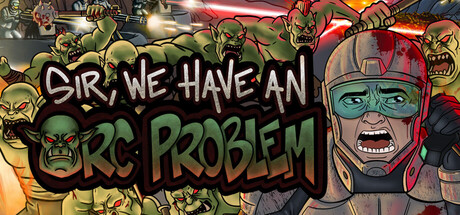
Fluid Physics Meets Swarm Defense: A Definitive Review of 'Sir, We Have an Orc Problem'

액체 물리학과 호드 디펜스의 참신한 결합, 명암이 갈린 콘텐츠 레이어: 'Sir, We Have an Orc Problem' 심층 평론

1. Introduction: Historical Context and Market Expectations

The indie tower defense ecosystem has recently undergone a major structural shift. Moving away from rigid, deterministic pathing models, modern indie developers are actively experimenting with emergent physics systems and massive scale mob generation to reinvigorate the genre. Entering this competitive landscape, Sir, We Have an Orc Problem captured widespread attention upon its initial public playtest. The game promised an intriguing hybrid gameplay premise: pairing screen-clearing waves of thousands of incoming orc swarms with a dynamic fluid physics simulation engine.

Evoking nostalgia for golden-era browser Flash strategy games while attempting to leverage contemporary particle rendering capabilities, the title generated notable community anticipation. Gamers were enticed by the prospect of controlling flowing liquid dynamics to wash away dense enemy formations in real-time. However, following its official commercial release, the full title exposes a stark divide between its brilliant underlying core physics hook and its fundamentally constrained content volume and progression architecture.

2. Gameplay Architecture: Core Loops and Innovation

The foundational core gameplay loop revolves around constructing specialized defensive towers alongside fluid-simulated channels, directing dynamic liquid currents to slow down, funnel, and obliterate massive swarms of green-skinned attackers. The implementation of real-time fluid mechanics represents a genuinely innovative departure from traditional static tower defense conventions. Rather than relying purely on maze building or DPS check barriers, players manipulate fluid vectors to control horde density and maximize area-of-effect damage, creating an invigorating mechanical feedback loop during initial encounters.

Regrettably, significant structural bottlenecks emerge when evaluating the game's meta-progression curve and tech tree balance. Once the initial novelty of liquid simulation begins to wear off around the mid-game milestone, players are confronted with a tedious resource farming requirement. Progressing through higher-tier technology upgrades forces players into replaying previously completed levels solely to accumulate upgrade currency—a classic mechanical artificially lengthening loop known as mid-game grinding.

Furthermore, once an optimized tower layout is established in late-game stages, active player agency precipitously drops. The active tactical positioning transforms into passive waiting sessions where the player merely observes the screen for minutes until the wave timer expires. This creates a severe UX bottleneck that directly contradicts the dynamic momentum showcased during early demo builds, diminishing the game's overall strategic depth.

3. Visual Architecture, Soundscapes, and Optimization Engineering

From an architectural standpoint, the visual design adopts a hyper-pragmatic, utility-first philosophy. By bypassing high-density texture maps and expensive post-processing lighting pipelines, the rendering engine devotes its computational power entirely to processing multi-agent pathfinding and thousands of fluid-particle interactions concurrently without frame rate stutter. While this utilitarian visual aesthetic may appear overly simplistic or retro to players accustomed to modern visual fidelity, the resulting technical optimization under extreme entity load is remarkably stable.

The user interface (UI) mirrors this philosophy, offering functional minimalism that ensures zero friction during tower selection and resource allocation. However, its lack of artistic refinement may turn off players looking for polished graphical presentation. In terms of audio design, the soundscape provides visceral feedback through crisp impact sounds during swarm annihilations, though the soundtrack itself lacks thematic variance, contributing to auditory fatigue during prolonged level farming sessions.

4. Global Community Sentiment & Final Verdict

A comprehensive synthesis of global user sentiment highlights a polarized player consensus. On the positive spectrum, community sentiment celebrates the refreshing fluid mechanics, the sheer satisfaction of wiping out thousands of enemies on screen simultaneously, and the clear 5-to-10-hour timeframe required to achieve a 100% completion status. Players appreciative of golden-era Flash strategy games praise its accessible, unpretentious fun.

Conversely, critical user feedback focuses heavily on the game's steep price-to-content ratio. Priced at approximately $10 USD, many players report completing the entirety of the tech tree and all achievements in under 5 to 6 hours without needing strategic guides. Critics express disappointment regarding the loss of momentum from the early beta releases, pointing out the lack of crucial replayability features such as an Endless Mode, map randomizer, or Steam Workshop level builder support. The transition from active strategy to passive tower waiting is widely cited as a key area needing mechanical rework.

In conclusion, Sir, We Have an Orc Problem stands as a mechanically inventive tower defense title that offers immediate, high-octane entertainment driven by fluid dynamics. However, its shallow endgame ecosystem and repetitive mid-game grind prevent it from reaching genre-defining heights. It remains a compelling proof-of-concept best recommended during promotional sales or following future feature updates.


👉 View on Steam

2026년 7월 30일 목요일

Reinventing Dark Fantasy Extraction: How 'Mistfall Hunter' Melds Soulslike Precision with High-Stakes Extraction

Reinventing Dark Fantasy Extraction: How 'Mistfall Hunter' Melds Soulslike Precision with High-Stakes Extraction

1. Introduction: Market Expectations and Genre Paradigm Shifts

In recent years, the survival extraction genre—pioneered by titles like Escape from Tarkov and Dark and Darker—has established itself as one of the most lucrative yet punishing sub-genres in the interactive entertainment industry. Entering this intensely competitive space, Bellring Games presents Mistfall Hunter, an ambitious title that fuses third-person Soulslike combat fidelity with a high-stakes PvPvE extraction framework. Set in a bleak, post-Ragnarok dark fantasy realm enveloped by the terrifying Gyre Mist, the Deluxe Edition arrives with early access privileges, stash expansions, and unique meta-progression incentives. This critical evaluation dissects whether Mistfall Hunter successfully breaks free from traditional FPS extraction tropes to establish a new benchmark in third-person action RPG mechanics.

2. Gameplay Architecture: Core Loop and Mechanical Innovation

At its core, Mistfall Hunter operates on a rigorous gameplay loop: drop into a fog-dense, monster-infested zone, slay elite enemies and ancient bosses to collect invaluable Gyre Dew and high-tier loot, navigate deadly encounters against rival player squads, and secure a successful extraction at designated spatial portals. What truly distinguishes this title is its unrelenting commitment to third-person combat precision, featuring stamina management, iframe-based dodge rolls, and tight weapon-swing frame data.

Classes such as the Berserker, Shadowstray, and Sorcerer bring highly distinct mechanical roles and talent trees to the battlefield. Success relies heavily on reading enemy wind-up animations, parrying incoming strikes, and managing spatial positioning. However, when these Soulslike mechanics intersect with gear-persistence extraction systems, a notable UX bottleneck emerges: Gear Score disparities often lead to high-end geared parties steamrolling under-geared players, creating friction in the early-to-mid game progression economy.

3. Visual Architecture, Soundscape, and Optimization Engineering

Built upon the Unreal Engine 5 pipeline, Mistfall Hunter boasts an impressive visual suite. The implementation of Lumen dynamic lighting casts eerie, realistic illumination across murky environments, while Nanite micro-polygon geometry imparts a palpable weight to crumbling monolithic ruins and grotesque boss architectures. The game excels at immersing players in an oppressive, apocalyptic atmosphere.

Aesthetically complemented by a sophisticated spatial audio engine, directional telemetry plays a vital role in player survival. Gamers can pinpoint opponent movements, weapon draw sounds, and boss cast cues purely through precise auditory cues amidst the dense fog. Conversely, technical optimization remains a significant hurdle. During intense multi-squad PvPvE boss encounters featuring heavy particle effects, noticeable frame drops and micro-stuttering occur. In a combat system where frame-perfect dodges and parries dictate survival, these optimization hitches undermine mechanical responsiveness.

4. Global Community Sentiment and Final Verdict

Sifting through global player sentiment reveals a clear enthusiasm for the game's core hook—the combination of visceral melee combat and extraction tension is widely praised as a breath of fresh air. Gamers commend the high-risk, high-reward adrenaline rush and rich tactical variety offered by character builds. On the other hand, critical feedback centers on server tickrate desynchronization, melee hit-registration anomalies during high-latency scenarios, and unbalanced squad-versus-solo matchmaking queues.

In summary, Mistfall Hunter - Deluxe Edition is a formidable entry that successfully bridges two challenging genres. If the development team can address server stability, refine netcode synchronization, and smooth out match balance, this title possesses all the hallmarks of a long-term titan in the fantasy extraction space.

MASTER CRITIC SCORE: 8.3 / 10 (VERY GOOD)


👉 View on Steam

2026년 7월 29일 수요일

Company of Heroes 3: Final Stand Review - Tactical Depth and Structural Limitations

Company of Heroes 3: Final Stand Review - Defense Strategy and Its Limitations

1. Introduction: Market Expectations and Paradigm

Company of Heroes 3: Final Stand, developed by Relic Entertainment, represents the latest strategic extension of the iconic real-time strategy (RTS) franchise. Designed around defensive tactical mechanics, this release aimed to captivate both series veterans and newcomers. However, initial adoption has been met with friction due to controversial pricing and perceived shortcomings in content density.


2. Gameplay Mechanics: Core Loop and Originality

The core gameplay framework of Company of Heroes 3: Final Stand centers on a cooperative (co-op) defense mode. Players deploy specialized units and defensive structures to hold the line against escalating waves of enemy offensives. The primary loop integrates unit production, structural fortifications, and active tactical management, enriched by a roguelike progression system that introduces dynamic strategic variance.

Nevertheless, the absence of an integrated matchmaking system severely compromises the co-op experience, while the steep price point relative to available content remains a major point of criticism among players.


3. Visual Architecture, Soundscape, and Optimization Engineering

Visually, Company of Heroes 3: Final Stand demonstrates notable fidelity improvements over its predecessors. The visual architecture features detailed unit and structural assets alongside dynamic real-time destruction effects. Complementing the visual presentation, the audio architecture utilizes realistic sound design and evocative musical orchestration to heighten player immersion.

However, technical optimization remains a significant weak point, with noticeable frame drops and system instability during high-load combat engagements.


4. Global User Sentiment Analysis and Final Master Score

Global player sentiment regarding Company of Heroes 3: Final Stand remains sharply divided. While the tactical merits of the defensive loop and co-op foundation earn approval, persistent dissatisfaction surrounds the lack of automated matchmaking and limited overall content volume.

In conclusion, while Company of Heroes 3: Final Stand establishes a compelling strategic concept, its overarching execution is constrained by structural omissions and an elevated price point. Substantial post-launch updates and optimization patches could elevate its standing; however, in its current state, the title earns a Final Master Score of 4 out of 7.


👉 View on Steam

2026년 7월 28일 화요일

Le Mans Ultimate: US Track Pass Review – Apex Topography Meets Infrastructure Growing Pains

Le Mans Ultimate: US Track Pass Review

1. Introduction: Market Expectations and Strategic Positioning

Developed by Studio 397 and Motorsport Games, Le Mans Ultimate entered the simulator space as the definitive interactive platform for the official FIA World Endurance Championship (WEC). Inheriting the renowned physics pipeline and tire simulation fundamentals of rFactor 2, the title set a high benchmark for hardcore sim racers upon its initial early access release. The arrival of the 'US Track Pass' expansion represents a strategic move to broaden the simulator's regional footprint, integrating iconic North American endurance racing venues into the software's dedicated physical engine framework.

By bringing prestigious circuits such as Sebring International Raceway, Circuit of the Americas (COTA), and Indianapolis Motor Speedway into the fold, Studio 397 aimed not merely to expand track quantity, but to challenge drivers with distinct structural topographies. In a highly competitive sector populated by industry titans like iRacing and Assetto Corsa Competizione, combining Studio 397's advanced chassis flex and thermal tire modeling with North America's legendary, bump-heavy layouts raised substantial expectations across the global sim racing community.

2. Core Gameplay Loop: Mechanical Precision and Meta-Game Constraints

The primary triumph of the US Track Pass lies in its exceptional Force Feedback (FFB) fidelity and raw mechanical physics. Studio 397’s signature RealRoad technology operates at its absolute peak here. The dynamic surface evolution loop—where rubber deposits accumulate in real time to alter grip lines—translates the brutal concrete-to-asphalt transitions of Sebring straight to the wheel rim with uncanny accuracy. The mathematical modeling of damper compression, suspension geometry under lateral load, and aero-elastic balance provides an immersive drive across Hypercar, LMDh, and GT3 categories.

From a value proposition perspective, the expansion offers a compelling content-to-cost ratio compared to subscription-heavy competitors. The fidelity of laser-scanned track data and telemetry synchronization yields deeply rewarding multi-class racecraft. However, this mechanical excellence is juxtaposed against noticeable structural bottlenecks in the software's meta-game framework. The developer’s heavy resource allocation toward daily competitive matchmaking (CS Races) has led to the relative neglect of custom community league tools and private lobby architecture. This lack of deep league management integration hinders the long-term competitive sustainability that core simulation enthusiasts demand.

3. Visual Architecture, Soundscape, and Performance Optimization

Visually, the US Track Pass excels in architectural recreation. Utilizing comprehensive laser-scan datasets, the rendering engine precisely captures elevation changes, camber banking, and subtle asphalt patching. The dynamic lighting system during dawn, dusk, and night transitions—combined with multi-class headlight glare reflecting off worn track surfaces—creates a mesmerizing visual atmosphere.

The auditory engineering matches this visual ambition. Motor acoustics for naturally aspirated V8s and complex V6 turbocharged hybrid powertrains are captured with punchy mechanical resonance. The acoustic reflections off barrier walls, paired with tactile auditory cues for tire slip angles and chassis bottoming, provide driver feedback that is critical for searching for the limit of control.

On the optimization front, however, the technical profile exhibits strain. Due to high-density geometry and complex shader pipelines, noticeable frame-rate dips occur during full-grid multi-class race starts and during heavy lighting transitions. Thread-level CPU optimizations and memory footprint management remain critical areas requiring ongoing engineering updates from the development team.

4. Global Community Sentiment and Final Verdict

Synthesizing international user feedback reveals a clear dichotomy: overwhelming praise for driving physics and track topography paired with frustration over online ecosystem administration. The precision of the laser-scanned circuits, atmospheric fidelity, and track pricing structure receive widespread acclaim. Drivers seeking authentic mechanical immersion celebrate the rigorous feedback delivered through high-end direct-drive wheelbases.

Conversely, critical sentiment focuses on public lobby driving standards and the absence of robust officiating tools. The current automated safety rating and stewarding mechanisms struggle to mitigate reckless driving in open multiplayer servers. Furthermore, the delay in deploying complete league management APIs leaves dedicated racing clubs in a state of limbo. While the content value of the US Track Pass is undeniable, maximizing its long-term impact requires equal dedication to refining online etiquette systems and community-focused infrastructure.

Final Verdict: The 'Le Mans Ultimate - US Track Pass' stands as a triumph of tire thermodynamics and track recreation engineering. It delivers an uncompromised, exhilarating driving experience on the asphalt. While its surrounding meta-game and multiplayer infrastructure still require polish, for pure simulation purists seeking the ultimate test of endurance racecraft, this expansion is an essential addition to the digital garage.


👉 View on Steam

2026년 7월 27일 월요일

Metal Gear Solid Δ: Snake Eater — The Truth Behind the Legend

Metal Gear Solid Δ: Snake Eater — The Truth Behind the Legend

1. Introduction: The Paradigm of the Times and Market Expectations

Metal Gear Solid Δ: Snake Eater, a full remake of Konami's iconic Metal Gear Solid 3, has garnered immense anticipation across the global gaming industry. By preserving the original narrative structure and core mechanics while integrating modernized graphics, acoustics, and refined gameplay systems, the title aims to captivate both franchise veterans and newcomers alike.

Konami seeks to initiate a new chapter for the Metal Gear Solid franchise with this release, making its commercial and critical performance a pivotal indicator for the company's future IP strategy and broader industry trends.

2. Gameplay Mechanics: Core Loop and Proof of Originality

The gameplay of Metal Gear Solid Δ: Snake Eater retains the foundational loop of the original while introducing sophisticated mechanics to heighten tactical depth. Stealth remains the paramount gameplay pillar, requiring players to execute multifaceted strategies to evade and neutralize threats in dynamic environments.

Newly introduced features—such as dynamic battle damage and uniform wear systems—substantially elevate visual realism and environmental immersion. Furthermore, modernized control schemes offer an intuitive and responsive gameplay experience tailored to contemporary standards.

3. Visual Architecture, Soundscape, and Optimization Engineering

Rebuilt on Unreal Engine 5, the visual architecture delivers an extraordinarily realistic and intricate render of the jungle setting. The revamped soundscape further amplifies narrative tension and acoustic fidelity, creating an engrossing atmosphere.

However, technical constraints remain. A frame rate cap at 60 FPS presents a clear limitation for enthusiasts utilizing high-refresh-rate displays. Additionally, optimization inconsistencies on specific hardware configurations occasionally result in performance drops, highlighting technical hurdles that warrant further polishing.

4. Global User Sentiment Analysis and Final Master Rating

Global user sentiment regarding Metal Gear Solid Δ: Snake Eater remains distinctly polarized. While one segment commends the visual overhauls, atmospheric sound design, and faithful execution, another criticizes the premium price point and the relative absence of expansive new story content.

The final master rating stands at 7.5/10. Although the visual and audio advancements alongside core mechanics are commendable, optimization issues and pricing strategy persist as notable drawbacks. Metal Gear Solid Δ: Snake Eater serves as a compelling tribute for series enthusiasts, yet resolving performance bottlenecks remains crucial for sustained market traction.


👉 View on Steam

2026년 7월 26일 일요일

Anarchy on the Graveyard Shift: A Rigorous Critique of 'Shift At Midnight'

Anarchy on the Graveyard Shift: A Rigorous Critique of 'Shift At Midnight'

1. Introduction: Market Expectations and Genre Evolution

In recent years, the indie gaming ecosystem has witnessed a pronounced rise in job-simulation horror hybrids. Pioneered by developers like Chilla's Art and popularized by titles such as 'The Exit 8', this subgenre thrives on juxtaposing mundane, repetitive micro-labor with psychological dread and surreal anomalies. 'Shift At Midnight', developed by Indie Go Studio, positions itself squarely within this evolving paradigm. Operating under the familiar premise of a late-night gas station and convenience store, the title invites players into an isolated environment where routine administrative tasks are relentlessly disrupted by surreal hazards and emergent chaos. Market expectations were fueled by the promise of an unhinged, high-stress simulator; however, the final product presents a stark dichotomy between inspired ludic concepts and severe technical execution flaws.

2. Gameplay Mechanics: Core Loop and Mechanical Depth

The core gameplay loop of 'Shift At Midnight' hinges on high-density asynchronous task management paired with rapid cognitive processing. Players are tasked with verifying customer IDs, operating gas pumps, maintaining store cleanliness, and processing transactions. While these mechanics mirror standard simulation tropes, the title elevates itself by introducing systemic cognitive overload. The game's mechanical brilliance lies in its unscripted, chaotic interludes. While meticulously scrutinizing an ID card to verify age compliance, the player is subjected to a sensory assault: service bells ringing incessantly, a gnome unpredictably driving a motorcycle through the forecourt, and distressed screams reporting a corpse in the restroom. This multi-threaded task environment induces genuine psychological friction.

Furthermore, the inclusion of reactive physical combat—specifically allowing the player to wield a sledgehammer against erratic customers or uncanny threats—fundamentally alters the dynamic. Rather than keeping the player trapped in passive vulnerability, the mechanics introduce aggressive agency. This subversion of typical horror tropes creates a volatile gameplay loop where mundane service tasks seamlessly dissolve into absurd violent mitigation, offering a distinct, cathartic experience rare within the genre.

3. Visual Architecture, Soundscape, and Optimization Engineering

Visually, the title utilizes a retro-inspired, low-fidelity 3D aesthetic that effectively enhances claustrophobia and paranoia. The harsh flicker of fluorescent lighting, cast against the pitch-black exterior of the desolate gas station, establishes a bleak visual tone. The character models feature uncanny, slightly distorted geometry, reinforcing the unsettling narrative context. Sound design plays an equally pivotal role; layered spatial audio cues—ranging from the harsh chime of the front door to distant mechanical thrums—keep the player's sensory awareness perpetually heightened.

Regrettably, the underlying engineering fails to support these artistic ambitions. The technical architecture suffers from crippling flaws, particularly within its UI and input handling. The escape key menu triggers severe UI softlocks, rendering navigation impossible and freezing the state machine. Triggers for key environmental events frequently fail to fire, resulting in broken progression loops that evoke the feel of an unpolished early tech demo rather than a commercial product. Frequent frame-rate drops, input lag, and unresolved layout glitches point to a critical absence of Quality Assurance (QA) and engine optimization.

4. Global Community Sentiment and Final Verdict

Synthesis of global player feedback reveals a heavily polarized reception. The positive sentiment is driven by the game's dark humor, chaotic emergent interactions, and the raw thrill of sledgehammer-based defense amidst high-stress multitasking. Players celebrating the title frequently highlight the satirical portrayal of hazardous late-night retail work, praising its unhinged surrealism and memetic value.

Conversely, the negative pushback is overwhelming regarding systemic stability. Community consensus highlights game-breaking technical defects—most notably the persistent ESC menu softlock, broken UI layers, and abrupt build termination issues. While Western players exhibited greater tolerance for the game's absurdities, international feedback universally condemned the lack of localized polish and game-halting bugs.

In summary, 'Shift At Midnight' possesses a uniquely compelling design framework, successfully turning routine night-shift labor into a vortex of surreal terror and dark hilarity. However, its brilliant mechanical ideas are severely compromised by technical negligence and critical UI bottlenecks. Until systemic patches rectify its fundamental code architecture, it remains an intriguing yet heavily compromised indie experiment.

Final Master Rating: 6.2 / 10


👉 View on Steam

2026년 7월 25일 토요일

From Forensic Deduction to Narrative Quest: How 'Staffer Retro' Redefines the Supernatural Mystery Legacy

From Forensic Deduction to Narrative Quest: How 'Staffer Retro' Redefines the Supernatural Mystery Legacy

1. Introduction: Market Expectations and Paradigm Shift

Team Tetrapod’s 'Staffer Universe' holds a distinguished position in the indie visual novel and mystery landscape. Prior hits such as Staffer Case and Staffer Reborn set a high benchmark by combining a 1960s retro-futuristic fantasy setting—where superpowered individuals called 'Staffers' coexist with ordinary humans—with rigorous, courtroom-style forensic logic systems. Players expect a deeply analytical loop centered around cross-examining documents, analyzing supernatural ability classifications, and spotting contradictions.

With the release of Staffer Retro : A Supernatural Mystery Quest, community anticipation initially revolved around receiving another complex deductive puzzle box. However, Team Tetrapod boldly shifted direction, trading pure courtroom logic battles for an expansive, character-driven quest adventure that explores the lore and intertextual origins of its established universe.

2. Gameplay Mechanics: Core Loops and Structural Divergence

The core gameplay loop of Staffer Retro reflects a systemic shift in game design. While Staffer Case relied heavily on a tight matrix of evidence correlation and micro-logical deduction, Staffer Retro prioritizes a narrative quest architecture. Players navigate through act-based story arcs, gathering clues that function as progression keys rather than high-friction logic roadblocks.

The mechanics retain the series' signature document-based ability verification system, but the puzzle design is noticeably calibrated toward narrative momentum rather than punitive trial-and-error. This design choice smooths out pacing issues and prevents narrative bottlenecks. However, for purists seeking the relentless deductive friction of the original title, this shift feels like a mechanical simplification. The ludic reward system now favors thematic realization and emotional resonance over hardcore intellectual problem-solving.

3. Visual Architecture, Soundscape, and Optimization Engineering

Aesthetically, Staffer Retro maintains and elevates the franchise’s iconic mid-century comic book art style. Character sprites possess dynamic expression transitions and improved framing that combat the static nature of text-heavy visual novels. During pivotal narrative climaxes, subtle screen-shake effects, camera pans, and layered sprite rendering enhance the emotional gravity of the scene.

The soundscape is equally meticulous. The audio direction blends 1960s-inspired noir jazz motifs with low-frequency ambient soundscapes during investigative segments, driving home the atmosphere of retro espionage and supernatural tension. From a technical optimization standpoint, the title runs flawlessly across hardware configurations. Text rendering, UI transitions, and frame pacing remain rock-solid, showing high build stability devoid of performance bottlenecks.

4. Global Community Sentiment and Final Verdict

Analysis of global user sentiment reveals a distinct polarization stemming from player expectations. Series veterans across Korean, Japanese, and Western communities praise the game for its rich narrative payoff, sophisticated character arcs, and deep intertextual connections to Staffer Case and Dice Eater. They view the game as a vital piece of worldbuilding that enriches the overarching timeline.

Conversely, newcomers and players seeking a standalone mystery game highlight a steep barrier to entry. Without prior knowledge of the universe's mechanics and character dynamics, the narrative presents a dense information gap that can alienate uninitiated players.

Ultimately, Staffer Retro : A Supernatural Mystery Quest is evaluated as a bold genre evolution. While it sacrifices some standalone clarity and high-difficulty deductive mechanics, it succeeds as an emotionally resonant, narrative-rich quest that broadens the horizons of Team Tetrapod's supernatural mythos.

Final Master Score: 8.3 / 10 (Gold Award)


👉 View on Steam

2026년 7월 24일 금요일

The Definitive Benchmark of Classical ARPGs: An In-Depth Review of Grim Dawn - Fangs of Asterkarn

The Definitive Benchmark of Classical ARPGs: An In-Depth Review of Grim Dawn - Fangs of Asterkarn

1. Introduction: Historical Paradigm and Market Expectations

In a contemporary Action RPG (ARPG) market increasingly saturated by live-service monetization models, aggressive battle passes, and predatory microtransaction frameworks, Crate Entertainment's Grim Dawn stands as an uncompromising bastion of classic game design. While industry competitors often prioritize superficial engagement loops over mechanically dense progression, Crate Entertainment has spent years cultivating a deep, offline-capable, dual-mastery ecosystem. The release of its third major expansion, Fangs of Asterkarn, marks a pivotal moment—not merely as an expansion of existing landmasses, but as a masterclass in post-launch support and genre preservation.

Following years of meticulous development, the global gaming community greeted Fangs of Asterkarn with overwhelming enthusiasm. Functioning as a direct counter-response to the bloated development budgets and live-service fatigue associated with AAA titles, this expansion reinforces Crate Entertainment's legacy as a developer capable of delivering staggering content density with a lean, hyper-passionate team. The expansion addresses longstanding community aspirations while redefining the architectural boundaries of the engine.

2. Gameplay Mechanics: Core Loop and Proof of Originality

The operational core of Fangs of Asterkarn revolves around the introduction of the new Berserker mastery and a comprehensive overhaul of endgame progression mechanics. The Berserker class introduces fluid shapeshifting dynamics—specifically centered on werewolf forms—integrated with complex cold and bleeding status synergies. This addition seamlessly integrates into the game's existing Dual Mastery framework, opening up hundreds of new viable build permutations that challenge players to balance resource consumption with aggressive melee positioning.

Equally critical to the expansion’s success is the implementation of deterministic itemization solutions, most notably the Affix Transmutation system. By granting players agency over the statistical outcomes of double-rare items, the expansion effectively mitigates the grueling RNG friction that previously plagued endgame optimization. Coupled with the newly introduced Ascendant difficulty scaling and brutal Nemesis encounter tiers, the core gameplay loop achieves an immaculate equilibrium between rigorous reward structures and demanding mechanical execution.

3. Visual Architecture, Soundscape, and Optimization Engineering

From an engineering standpoint, Fangs of Asterkarn showcases extraordinary technical refinement given the constraints of its underlying game engine. The rugged, snow-covered tundra of Asterkarn is rendered with sophisticated atmospheric fog, enhanced environmental geometry, and dynamic lighting pipelines that elevate thematic immersion without compromising computational efficiency. Even during high-density combat encounters featuring complex particle rendering and screen-wide area-of-effect abilities, frame-pacing remains remarkably stable across diverse hardware configurations.

The comprehensive User Interface (UI) overhaul significantly streamlines operational ergonomics. By redesigning status iconography, inventory management workflows, and combat readouts, the game eliminates long-standing UX bottlenecks. Complementing the visual upgrade is a masterfully composed soundscape; visceral melee audio effects provide palpable tactile feedback for physical attacks, while the haunting orchestral score reinforces the somber narrative weight of Grim Dawn’s bleak dark-fantasy universe.

4. Global User Sentiment Analysis and Final Master Verdict

Synthesis of global player feedback reveals unanimous praise for the expansion’s incredible value proposition and structural depth. Players consistently contrast the sheer density of Fangs of Asterkarn against the fragmented monetization schemes of contemporary market rivals. The introduction of major quality-of-life systems alongside substantial game-wide balance patches has been hailed as a gold standard for developer-community rapport.

While minor critiques highlight steep difficulty spikes associated with specific endgame Nemesis health pools—demanding absolute optimization of defensive resistances and damage mitigation—these elements are broadly recognized as intentional design choices meant to challenge veteran theorycrafters. Ultimately, Grim Dawn - Fangs of Asterkarn is a resounding triumph of mechanical depth and player-first design philosophy. It cements Grim Dawn as an immortal titan within the isometric ARPG genre and sets an exemplary standard for the future of PC gaming.


👉 View on Steam

2026년 7월 23일 목요일

Modernizing Fantasy Action RPG Architecture: A Comprehensive Review of DragonSword: Awakening - Deluxe Edition

Modernizing Fantasy Action RPG Architecture: A Comprehensive Review of DragonSword: Awakening - Deluxe Edition

1. Introduction: Industry Paradigms and Market Expectations

Amid an era where the dark fantasy action-RPG subgenre struggles against design stagnation and diminishing player tolerance for derivative mechanics, DragonSword: Awakening - Deluxe Edition enters the market with the ambition of bridging classical combat frameworks with modern rendering architecture. Developed with a clear imperative to revive complex animation-driven combat while leveraging next-gen visual tools, the title generated substantial anticipation among hardcore action aficionados prior to its release. The Deluxe Edition package specifically promises an enriched experience, bundling extended side-quest lines, exclusive equipment progression paths, and remastered audio-visual assets designed to position the game at the apex of its genre category. This critical analysis evaluates whether the game's mechanical foundational design and engineering execution fulfill these lofty industry expectations or succumb to recurring genre tropes.

2. Gameplay Mechanics: Core Loop and Proving Originality

At its core, the primary gameplay loop of DragonSword: Awakening revolves around a highly responsive, stance-based dynamic combat system integrated with microsecond-precise frame parrying logic. Players are required to execute real-time stance switching across three distinct combat disciplines. This mechanic relies on tight animation priority and cancel windows that demand exceptional situational awareness and reflex control.

Regarding resource management mechanics, the interdependent relationship between stamina consumption rates and active skill cooldowns introduces an intricate tactical layer to encounters. The game discourages mindless button-mashing by strictly punishing miscalculated attack recoveries through frame-advantage penalties inflicted by enemy AI counter-attacks. However, this high-level combat execution is occasionally bottlenecked by structural flaws in boss encounter architectures, which fall back heavily on scripted QTE sequences that break combat flow. Furthermore, certain skill tree branches exhibit clear scaling imbalances, leading to a meta-game play consolidation that restricts build diversity during endgame progression phases.

3. Visual Architecture, Soundscapes, and Optimization Engineering

Built upon the Unreal Engine 5 pipeline, the game's visual architecture showcases undeniable technical ambition. The implementation of Lumen dynamic global illumination alongside Nanite virtualized geometry creates an exceptionally immersive, atmospheric world characterized by realistic material textures and subtle ambient shadow casting. Environmental destruction parameters and particle density during heavy spellcasting sequences offer a commanding visual presentation.

The spatial audio engineering further reinforces combat readability. High-frequency impacts and dynamic directional cues provide vital auditory telemetry for incoming off-screen attacks, working seamlessly alongside the game's orchestral score. Regrettably, these graphical and auditory achievements are dampened by technical optimization deficiencies. Benchmark telemetry reveals noticeable shader compilation stuttering and frame-pacing anomalies during dense scene transitions and major boss phases. Even on high-end hardware configurations, erratic frame drops suggest an unoptimized GPU/CPU resource allocation pipeline that requires immediate patch mitigation.

4. Global Community Sentiment and Final Master Rating

Synthesizing global community telemetry and user feedback data reveals a polarized reception. Hardcore action enthusiasts applaud the game's intricate stance mechanics, high skill ceiling, and the comprehensive lore additions provided in the Deluxe Edition package. Conversely, casual players and tech-focused consumers express frustration over optimization bottlenecks, input latency variance, and repetitive endgame progression loops.

In conclusion, DragonSword: Awakening - Deluxe Edition succeeds as a technically ambitious, mechanics-first action RPG that honors the legacy of hardcore combat titles while showcasing modern engine capabilities. Despite its mechanical brilliance, technical optimization bugs and localized pacing bottlenecks prevent it from achieving absolute perfection. For players seeking deep combat loops and challenging encounter designs, it stands as a robust entry worthy of serious engagement.

FINAL VERDICT: 8.1 / 10 (Solar82 Master Rating)


👉 View on Steam

2026년 7월 22일 수요일

Tears of Metal: A Rogue-like Musou Odyssey

철과 눈물의 시대: 스코틀랜드의 로그라이크 무쌍

1. Introduction: Paradigm Shift and Market Expectations

"Tears of Metal" presents a unique blend of Musou and Rogue-like elements, capturing the attention of gamers worldwide. With its Scottish theme and an impressive soundtrack, the game promises an immersive experience. Developed by [Developer Name], known for their innovative titles, this release aims to solidify their reputation in the industry.

The question remains: can it challenge the dominance of "Dynasty Warriors" and offer a fresh take on the genre? Market expectations are high, not only for its gameplay but also for its performance on the PC platform. Will it deliver a seamless experience and evolve with player feedback?

2. Gameplay Mechanics: Core Loop and Uniqueness

The core loop of "Tears of Metal" seamlessly integrates Musou-style action with strategic Rogue-like choices. Players embody a Scottish warrior, battling enemies, exploring the battlefield, and utilizing a diverse arsenal of weapons and skills. The addition of Rogue-like elements adds a layer of challenge and strategic decision-making.

The combat system is deep and engaging, with a variety of enemies to face and patterns to master. Skillful timing and strategic use of abilities are rewarded. Character progression and equipment enhancement systems further motivate players to explore and experiment.

The Rogue-like elements introduce a new dimension, forcing players to adapt to randomly generated environments and enemies. This increases the challenge and encourages players to make strategic choices. The introduction of meta-game play elements, where choices in one playthrough affect future attempts, adds an extra layer of strategic depth.

3. Visual Architecture, Soundscape, and Optimization Engineering

The visual architecture of "Tears of Metal" captures the unique atmosphere of Scotland. The attention to detail in character and environment design is impressive, especially during intense battle scenes. The soundtrack complements the theme perfectly, enhancing the tension and emotion of combat.

Optimization-wise, the game receives mostly positive feedback. Many players report smooth gameplay, and system stability is generally good. However, there are reports of frame drops on high-end PCs, indicating the need for ongoing optimization efforts by the developers.

4. Global User Sentiment Analysis and Final Master Rating

"Tears of Metal" has received positive reception from players worldwide. Users praise its uniqueness and fun factor, particularly the blend of Musou and Rogue-like elements. The Scottish theme and art style have also garnered positive attention.

However, some players express concerns about difficulty balancing and content variety. There are calls for more characters, battlefields, and game modes to enhance replayability. Additionally, some bugs and optimization issues have been reported, requiring developer attention.

Overall, "Tears of Metal" offers a unique and immersive experience, breathing new life into the Musou genre. With continued updates and player feedback integration, it has the potential to become an even more polished and enjoyable title. The final master rating is 8.5/10, highly recommended for fans of Musou and Rogue-like genres.


👉 View on Steam

Rugged Cat S22 Flip Review

Rugged Cat S22 Flip Review Introduction In a tech landscape dominated by hyper-delicate glass flagships, a growing movement of developers an...