1. Introduction: Historical Paradigm and Market Expectations
In a contemporary Action RPG (ARPG) market increasingly saturated by live-service monetization models, aggressive battle passes, and predatory microtransaction frameworks, Crate Entertainment's Grim Dawn stands as an uncompromising bastion of classic game design. While industry competitors often prioritize superficial engagement loops over mechanically dense progression, Crate Entertainment has spent years cultivating a deep, offline-capable, dual-mastery ecosystem. The release of its third major expansion, Fangs of Asterkarn, marks a pivotal moment—not merely as an expansion of existing landmasses, but as a masterclass in post-launch support and genre preservation.
Following years of meticulous development, the global gaming community greeted Fangs of Asterkarn with overwhelming enthusiasm. Functioning as a direct counter-response to the bloated development budgets and live-service fatigue associated with AAA titles, this expansion reinforces Crate Entertainment's legacy as a developer capable of delivering staggering content density with a lean, hyper-passionate team. The expansion addresses longstanding community aspirations while redefining the architectural boundaries of the engine.
2. Gameplay Mechanics: Core Loop and Proof of Originality
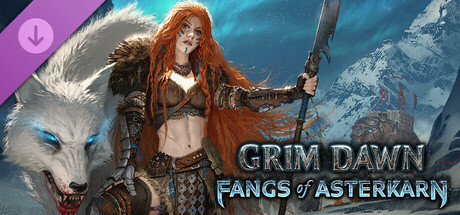
The operational core of Fangs of Asterkarn revolves around the introduction of the new Berserker mastery and a comprehensive overhaul of endgame progression mechanics. The Berserker class introduces fluid shapeshifting dynamics—specifically centered on werewolf forms—integrated with complex cold and bleeding status synergies. This addition seamlessly integrates into the game's existing Dual Mastery framework, opening up hundreds of new viable build permutations that challenge players to balance resource consumption with aggressive melee positioning.
Equally critical to the expansion’s success is the implementation of deterministic itemization solutions, most notably the Affix Transmutation system. By granting players agency over the statistical outcomes of double-rare items, the expansion effectively mitigates the grueling RNG friction that previously plagued endgame optimization. Coupled with the newly introduced Ascendant difficulty scaling and brutal Nemesis encounter tiers, the core gameplay loop achieves an immaculate equilibrium between rigorous reward structures and demanding mechanical execution.
3. Visual Architecture, Soundscape, and Optimization Engineering
From an engineering standpoint, Fangs of Asterkarn showcases extraordinary technical refinement given the constraints of its underlying game engine. The rugged, snow-covered tundra of Asterkarn is rendered with sophisticated atmospheric fog, enhanced environmental geometry, and dynamic lighting pipelines that elevate thematic immersion without compromising computational efficiency. Even during high-density combat encounters featuring complex particle rendering and screen-wide area-of-effect abilities, frame-pacing remains remarkably stable across diverse hardware configurations.
The comprehensive User Interface (UI) overhaul significantly streamlines operational ergonomics. By redesigning status iconography, inventory management workflows, and combat readouts, the game eliminates long-standing UX bottlenecks. Complementing the visual upgrade is a masterfully composed soundscape; visceral melee audio effects provide palpable tactile feedback for physical attacks, while the haunting orchestral score reinforces the somber narrative weight of Grim Dawn’s bleak dark-fantasy universe.
4. Global User Sentiment Analysis and Final Master Verdict
Synthesis of global player feedback reveals unanimous praise for the expansion’s incredible value proposition and structural depth. Players consistently contrast the sheer density of Fangs of Asterkarn against the fragmented monetization schemes of contemporary market rivals. The introduction of major quality-of-life systems alongside substantial game-wide balance patches has been hailed as a gold standard for developer-community rapport.
While minor critiques highlight steep difficulty spikes associated with specific endgame Nemesis health pools—demanding absolute optimization of defensive resistances and damage mitigation—these elements are broadly recognized as intentional design choices meant to challenge veteran theorycrafters. Ultimately, Grim Dawn - Fangs of Asterkarn is a resounding triumph of mechanical depth and player-first design philosophy. It cements Grim Dawn as an immortal titan within the isometric ARPG genre and sets an exemplary standard for the future of PC gaming.
👉 View on Steam




댓글 없음:
댓글 쓰기