1. Introduction: Market Expectations and Genre Paradigm
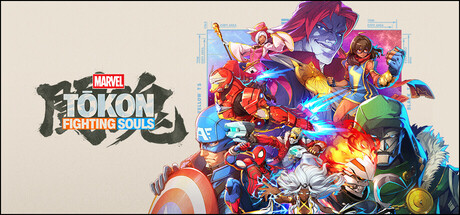
The convergence of Marvel's legendary intellectual property with high-density 2D/3D versus fighting game (FTG) mechanics has historically served as a catalyst for intense excitement within the global gaming landscape. 'MARVEL Tōkon: Fighting Souls' entered the market bearing the colossal responsibility of revitalizing the anime-style tag-team fighting genre, evoking memories of legendary tag fighters while forging its own contemporary identity. Intended to bridge the gap between casual comic book enthusiasts and battle-hardened competitive esports professionals, the title promised a sophisticated mechanical framework combined with high-fidelity visual presentation. The central thesis behind its development was to resolve the age-old genre paradox: lowering the execution barrier for newcomers without sacrificing the astronomical skill ceiling demanded by frame-data purists. However, despite its ambitious game design architecture and initial momentum, the game's actual commercial release has degenerated into a contentious battleground dominated by severe engineering mishaps and friction-heavy platform policies.
2. Gameplay Architecture: Core Loop and Technical Depth
From a mechanical design perspective, 'MARVEL Tōkon: Fighting Souls' stands as a masterclass in modern fighting game design. The core gameplay loop revolves around frame-precise neutral interactions, intricate resource management, and a dynamic combo extension system designated as the 'FlexStrike' mechanic. A deeper dive into the system architecture reveals startup windows calibrated around 26-frame startup animations, yielding tight, highly responsive blockstrings and intricate push-block dynamics. To accommodate varying player dexterity levels, the control mapping natively supports both classical quarter-circle Motion Inputs and a streamlined Quick Special system, operating harmoniously with built-in SOCD (Simultaneous Opposite Cardinal Direction) protocols tailored for modern leverless controllers and arcade sticks alike. Hitbox fidelity and hurtbox scaling exhibit exceptional mathematical precision, delivering satisfying tactical feedback during aerial counter-hits and multi-character tag assists. Regrettably, while this combat framework demonstrates elite-tier design philosophy, its mechanical brilliance is dramatically overshadowed by the technical instability of the executable client hosting it.
3. Visual Rendering, Soundscape, and Optimization Bottlenecks
Aesthetically, the title utilizes a striking cel-shaded rendering pipeline that seamlessly translates comic book line-art into vibrant three-dimensional motion. Dynamic camera sweeps during high-damage super moves, paired with an evocative, multi-layered acoustic soundscape, create an immersive spectator experience that honors its source material. Yet, this visual brilliance is utterly undermined by a catastrophic lack of technical optimization and stability on PC platforms. Critical runtime defects cause the game executable to crash to the desktop within 30 seconds of reaching the main menu—an issue entirely unresolvable via traditional file verification or clean reinstalls, pointing toward severe memory allocation flaws and engine backend corruption. Furthermore, the development team's failure to enable Linux and Steam Deck compatibility represents an unforced error; enabling Easy Anti-Cheat (EAC) Proton integration requires minimal developer intervention, yet handheld PC users remain entirely locked out. Compounding this technical neglect is the mandatory PlayStation Network (PSN) account integration, creating an artificial, high-friction user experience bottleneck that actively repels the PC enthusiast demographic.
4. Global Community Sentiment and Final Verdict
An exhaustive synthesis of global user telemetry and community feedback reveals a starkly polarized consensus regarding 'MARVEL Tōkon: Fighting Souls'. While fighting game purists actively praise the intricate combo scaling, precise input buffering, and deep tactical neutral game, the overwhelming majority of public discourse is dominated by frustration over severe software engineering failures. Constant client crashes, unoptimized backend pipelines, complete neglect of Proton/Linux compatibility, and forced account linking have generated widespread backlash, effectively drowning out the game's mechanical merits under a sea of negative sentiment. Ultimately, 'MARVEL Tōkon: Fighting Souls' is a tragic masterpiece: a structurally brilliant tag-team fighter entombed within an unacceptable PC port and anti-consumer publishing decisions. Unless the developers deploy immediate emergency hotfixes addressing runtime crashes, activate Proton anti-cheat support, and relax intrusive platform requirements, the game's mechanical brilliance will remain inaccessible to the very community it was engineered to captivate.
👉 View on Steam


댓글 없음:
댓글 쓰기