1. Introduction: Market Expectations and Genre Paradigm Shifts
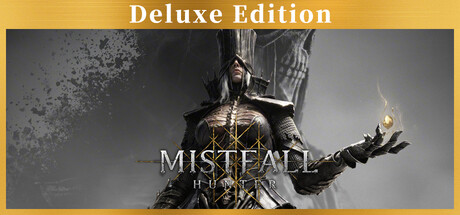
In recent years, the survival extraction genre—pioneered by titles like Escape from Tarkov and Dark and Darker—has established itself as one of the most lucrative yet punishing sub-genres in the interactive entertainment industry. Entering this intensely competitive space, Bellring Games presents Mistfall Hunter, an ambitious title that fuses third-person Soulslike combat fidelity with a high-stakes PvPvE extraction framework. Set in a bleak, post-Ragnarok dark fantasy realm enveloped by the terrifying Gyre Mist, the Deluxe Edition arrives with early access privileges, stash expansions, and unique meta-progression incentives. This critical evaluation dissects whether Mistfall Hunter successfully breaks free from traditional FPS extraction tropes to establish a new benchmark in third-person action RPG mechanics.
2. Gameplay Architecture: Core Loop and Mechanical Innovation
At its core, Mistfall Hunter operates on a rigorous gameplay loop: drop into a fog-dense, monster-infested zone, slay elite enemies and ancient bosses to collect invaluable Gyre Dew and high-tier loot, navigate deadly encounters against rival player squads, and secure a successful extraction at designated spatial portals. What truly distinguishes this title is its unrelenting commitment to third-person combat precision, featuring stamina management, iframe-based dodge rolls, and tight weapon-swing frame data.
Classes such as the Berserker, Shadowstray, and Sorcerer bring highly distinct mechanical roles and talent trees to the battlefield. Success relies heavily on reading enemy wind-up animations, parrying incoming strikes, and managing spatial positioning. However, when these Soulslike mechanics intersect with gear-persistence extraction systems, a notable UX bottleneck emerges: Gear Score disparities often lead to high-end geared parties steamrolling under-geared players, creating friction in the early-to-mid game progression economy.
3. Visual Architecture, Soundscape, and Optimization Engineering
Built upon the Unreal Engine 5 pipeline, Mistfall Hunter boasts an impressive visual suite. The implementation of Lumen dynamic lighting casts eerie, realistic illumination across murky environments, while Nanite micro-polygon geometry imparts a palpable weight to crumbling monolithic ruins and grotesque boss architectures. The game excels at immersing players in an oppressive, apocalyptic atmosphere.
Aesthetically complemented by a sophisticated spatial audio engine, directional telemetry plays a vital role in player survival. Gamers can pinpoint opponent movements, weapon draw sounds, and boss cast cues purely through precise auditory cues amidst the dense fog. Conversely, technical optimization remains a significant hurdle. During intense multi-squad PvPvE boss encounters featuring heavy particle effects, noticeable frame drops and micro-stuttering occur. In a combat system where frame-perfect dodges and parries dictate survival, these optimization hitches undermine mechanical responsiveness.
4. Global Community Sentiment and Final Verdict
Sifting through global player sentiment reveals a clear enthusiasm for the game's core hook—the combination of visceral melee combat and extraction tension is widely praised as a breath of fresh air. Gamers commend the high-risk, high-reward adrenaline rush and rich tactical variety offered by character builds. On the other hand, critical feedback centers on server tickrate desynchronization, melee hit-registration anomalies during high-latency scenarios, and unbalanced squad-versus-solo matchmaking queues.
In summary, Mistfall Hunter - Deluxe Edition is a formidable entry that successfully bridges two challenging genres. If the development team can address server stability, refine netcode synchronization, and smooth out match balance, this title possesses all the hallmarks of a long-term titan in the fantasy extraction space.
MASTER CRITIC SCORE: 8.3 / 10 (VERY GOOD)
👉 View on Steam



댓글 없음:
댓글 쓰기