2026년 6월 3일 수요일

Hitting Merge with Confidence: How Release It! Prepares Developers for the Reality of Live Production

Featured Image

Hitting Merge with Confidence: How Release It! Prepares Developers for the Reality of Live Production

Introduction: The AI & Software Evolution


The transition from writing code in a safe, isolated local environment to deploying it to live users is one of the most nerve-wracking milestones in a developer's career. This psychological hurdle, often discussed in developer communities as the anxiety of "hitting merge," highlights a critical gap in modern software engineering education. While developers pride themselves on being decently good at what they do and, more importantly, on loving the craft of writing code, the unpredictable reality of live production environments can quickly turn excitement into dread. To bridge this gap, we look to the industry-standard literature that addresses both the mental shift and the concrete technical patterns required to survive this transition: Release It!: Design and Deploy Production-Ready Software (2nd Edition).


Technical Breakdown & Capabilities


Written by Michael T. Nygard and published by the Pragmatic Bookshelf, this 376-page authoritative guide is available in both Paperback and Kindle formats. Nygard structures the book to systematically dismantle the chaos of live environments through critical chapters such as Living in Production, Stability, Design for Resilience, Scale, and Security. Rather than offering abstract theory, the text provides actionable architectural patterns. For instance, it details how to implement Circuit Breakers to prevent localized failures from cascading across an entire system, and how to use Bulkheads to partition resources so that a failure in one service does not bring down the entire application. These technical patterns directly solve the real-world problem of system degradation under unexpected load.


The Developer & Productivity Perspective


From a productivity standpoint, the anxiety of "hitting merge" often leads to hesitation, slower deployment cycles, and over-engineering. By absorbing the methodologies in Release It!, developers can shift their mindset from fearing production to designing for it. Understanding how to build resilient systems allows engineers to write code that fails gracefully, reducing the time spent on emergency hotfixes and post-release firefighting. This mental and technical preparation dramatically boosts coding efficiency, as developers can confidently push updates knowing their architecture is hardened against the unpredictable nature of live traffic. It transforms the deployment process from a high-stress event into a routine, automated workflow.


Final Verdict: Is It Worth the Integration?


Absolutely. For any developer preparing for their first push to production, or for engineering teams looking to standardize their resilience practices, Release It!: Design and Deploy Production-Ready Software (2nd Edition) is an indispensable asset. Michael T. Nygard delivers a masterclass that mitigates the anxiety of the merge button by replacing fear with robust, battle-tested engineering patterns. If you want to transition your code successfully from localhost to the global stage, this book is a mandatory addition to your professional library.


💻 Ready to Optimize Your Workflow?


👉 Click Here to Check this Tool on Amazon


*As an Amazon Associate, I earn from qualifying purchases. This helps support our tech reviews at no extra cost to you.*

2026년 6월 2일 화요일

Mastering GSoC 2026: How Forge Your Future with Open Source Unlocks the Next Generation of Collaborative Development

Featured Image

Mastering GSoC 2026: How Forge Your Future with Open Source Unlocks the Next Generation of Collaborative Development

Introduction: The AI & Software Evolution


The announcement of the Google Summer of Code (GSoC) 2026 selected projects, including major milestones for foundational libraries like stdlib, marks a critical juncture for modern software engineering. As open-source ecosystems become the bedrock of global digital infrastructure, the barrier to entry for meaningful contribution remains high. Navigating these complex codebases requires more than just raw coding skills; it demands a structured, strategic approach to community integration. This is where the authoritative guide, Forge Your Future with Open Source: Build Your Skills. Build Your Network. Build the Future of Technology, becomes an indispensable asset. By bridging the gap between aspiring developers and prestigious programs like GSoC 2026, this resource provides the exact roadmap needed to transition from a passive observer to a high-impact open-source contributor.


Technical Breakdown & Capabilities


To successfully secure a spot in GSoC 2026, developers must master both the technical and cultural mechanics of open-source software. Forge Your Future with Open Source systematically deconstructs these complexities through five core pillars. First, it establishes a deep understanding of the Foundations and Philosophies of Free and Open Source Software (FOSS), ensuring developers align with the collaborative ethos of the community. Second, the guide provides a methodology for finding the right open-source project and community, which is critical when evaluating organizations like stdlib for GSoC proposals.

Furthermore, the book offers a practical, step-by-step guide to making your first contribution, demystifying the pull request and code review workflows. Crucially, it addresses the often-overlooked technicalities of understanding open-source licensing and legalities, protecting both the developer and the project maintainers. Finally, it focuses on building a professional network and career through open-source contributions, transforming code commits into long-term career equity.


The Developer & Productivity Perspective


For developers aiming to submit winning GSoC 2026 proposals, productivity is not just about writing code faster; it is about writing the right code and communicating effectively. This guide directly optimizes developer workflows by teaching contributors how to evaluate projects efficiently and communicate with maintainers without friction. By mastering the exact workflows required to get proposals accepted, developers save hundreds of hours of trial and error. Instead of guessing how to approach a codebase like stdlib, readers learn to navigate version control, issue trackers, and community channels with professional precision. This systematic approach dramatically reduces the friction of the initial contribution cycle, allowing developers to focus on solving complex algorithmic challenges rather than struggling with administrative hurdles.


Final Verdict: Is It Worth the Integration?


Absolutely. For any developer, student, or software engineer targeting Google Summer of Code 2026, Forge Your Future with Open Source is an essential addition to their technical library. It is not merely a theoretical text; it is a highly practical, career-accelerating framework. By teaching aspiring contributors how to successfully find, evaluate, and contribute to open-source projects, it provides the precise toolkit needed to stand out in a highly competitive global landscape. If you want to turn your GSoC aspirations into a concrete reality and build a robust professional network, integrating the principles of this guide into your daily workflow is a non-negotiable step toward success.


💻 Ready to Optimize Your Workflow?


👉 Click Here to Check this Tool on Amazon


*As an Amazon Associate, I earn from qualifying purchases. This helps support our tech reviews at no extra cost to you.*
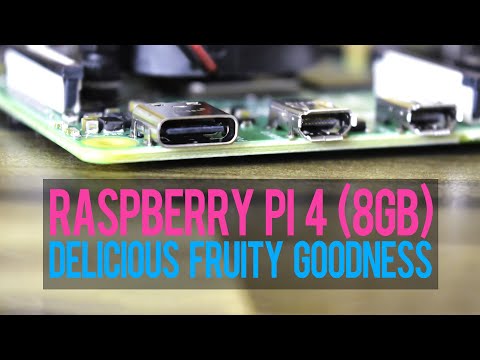
Raspberry Pi 4 Computer Model B 8GB Single Board Computer Review

Product Image

Raspberry Pi 4 Computer Model B 8GB Single Board Computer Review

Introduction


The DIY hardware movement is undergoing a massive renaissance. Driven by a desire to resist big tech and reclaim digital sovereignty, developers and makers are building custom "cyberdecks"—highly personalized, offline-first computers housed inside vintage items, rugged cases, and even everyday purses. At the absolute center of this creative counter-culture sits the Raspberry Pi 4 Computer Model B 8GB Single Board Computer. As the most powerful variant in its lineup, this credit-card-sized board has transitioned from a simple hobbyist tool into the definitive standard for custom, decentralized computing builds.


Technical Breakdown


To understand why this board dominates the DIY space, we have to look at its impressive technical foundation. The heart of the system is a 1.5 GHz ARM Cortex-A72 quad-core processor. This CPU provides a substantial performance leap over previous generations, offering the raw computational power required to run modern Linux distributions, compile code locally, and handle multitasking without stuttering.


A major bottleneck for single-board computers has historically been memory, but this model features a massive 8GB RAM configuration. This abundance of memory completely changes the user experience, allowing you to run memory-intensive development tools, local databases, and multiple browser tabs simultaneously.


For workspace flexibility, the board supports dual-display support up to 4K resolution. This allows developers to drive a dual-monitor setup directly from the Pi, drastically increasing screen real estate for debugging, writing code, and viewing documentation side-by-side.


Connectivity is equally robust. The board features Gigabit Ethernet, dual-band 2.4/5.0 GHz wireless LAN, and Bluetooth 5.0. This ensures ultra-fast wired networking for home servers, reliable wireless connectivity for portable builds, and seamless integration with wireless peripherals like mechanical keyboards and mice.


Finally, peripheral expansion is handled by 2 USB 3.0 ports and 2 USB 2.0 ports. The inclusion of USB 3.0 allows for high-speed data transfer to external solid-state drives (SSDs), which is crucial for anyone looking to bypass slow microSD card speeds for their primary operating system drive.


The Developer Perspective


For software engineers and system administrators, the Raspberry Pi 4 (8GB) is a highly capable, low-power Linux workstation. The 8GB of RAM is the true game-changer here, enabling developers to run local Docker containers, Kubernetes nodes (K3s), and lightweight IDEs directly on the metal. It serves as an excellent sandbox environment for testing ARM64 builds without cluttering your primary machine.


In the context of the cyberdeck and DIY community, this board is the ultimate engine. Its compact footprint and rich GPIO connectivity allow it to interface with custom keyboards, battery management systems, and unique display form factors. While specific battery life and power consumption metrics are not provided in current documentation—as they depend heavily on your custom power delivery setup—the board's efficiency makes it highly viable for long-duration, portable usage in the field. It empowers developers to build truly independent, secure, and highly customized technical workspaces.


Final Verdict


The Raspberry Pi 4 Computer Model B 8GB Single Board Computer remains the undisputed champion of the maker world. By packing desktop-class processing, dual-4K display capabilities, and generous memory into a tiny form factor, it provides unmatched value. Whether you are building a custom cyberdeck to take your workflow off the grid, or simply need a silent, power-efficient home server, this board is an essential tool for any modern developer's toolkit.


🛒 Ready to Upgrade Your Setup?


👉 Click Here to Check the Current Price on Amazon


*As an Amazon Associate, I earn from qualifying purchases. This helps support our tech reviews at no extra cost to you.*

China launches new Long March 12B rocket, reportedly without any safety warning

🎥 Daily Weird Science & Space Mystery Shorts Story


China just launched a massive rocket into space with absolutely zero warning, leaving global aviation completely blind to the danger of falling debris. This terrifying event marks the maiden voyage of China's brand-new Long March twelve-B rocket, a powerful next-generation booster designed to carry heavy payloads. It blasted off into the atmosphere in a surprise launch that caught international observers completely off guard, showcasing China's rapidly accelerating and highly secretive space capabilities to the entire world. Hidden inside this unannounced launch was a massive payload of Qianfan satellites, also known as the ambitious Thousand Sails constellation. This mega-project aims to rival Western satellite networks by deploying thousands of active spacecraft into low Earth orbit, drastically crowding our night skies with new technology and raising serious space traffic concerns. What makes this launch incredibly dangerous is that Chinese authorities reportedly issued absolutely no airspace notices or safety warnings to international aviation. Commercial pilots and global tracking systems had no official alerts about falling rocket debris or active launch trajectories, violating standard international safety protocols and risking lives in the process. Is China's secret space race putting global aviation at risk, or is this the new normal for international space travel? Let us know what you think in the comments below!


🎁 Explore more secrets and books about this topic on Amazon:

👉 Recommended "CHINA LAUNCHES LONG" Books


#shorts #science #mystery #space

2026년 6월 1일 월요일

Limitless AI Pendant Review

Product Image

Limitless AI Pendant Review

Introduction


The wearable AI market is experiencing a massive paradigm shift. As major tech players explore ambient hardware form factors, the Limitless AI Pendant emerges as a fascinating contender in the physical companion space. Designed to sit at the intersection of productivity and wellness, this wearable device captures and transcribes conversations, providing key insights and reminders. It represents a new class of screenless hardware aimed at reducing cognitive load for busy professionals who need to stay present while capturing critical data.


Technical Breakdown


To understand the hardware capability of the Limitless AI Pendant, we must look at its core specifications and design philosophy. The device is built around the NUNA Pendant form factor, a sleek, smart necklace design that ensures the microphone array and sensors remain optimally positioned to capture clear audio and biometric data without being intrusive.


In terms of manufacturing integrity, the device boasts rigorous Certification Details, specifically highlighting ISCC PLUS (International Sustainability and Carbon Certification) compliance. This certification ensures that the materials used in the pendant's physical shell meet strict circular economy and bio-economy standards, appealing to eco-conscious tech consumers.


For wellness and cognitive tracking, the pendant functions as a Smart Necklace for Mood Emotion Monitoring Tracking. By analyzing vocal tones and physiological markers, it helps users map their emotional states throughout the workday. This is paired with Mindfulness Vibration Waves, which deliver subtle haptic feedback to ground the user.


Additionally, the device features built-in Meditation Support on an Hourly basis, prompting users to take brief mental breaks. Note: Specific metrics regarding battery life, onboard storage capacity, and processor speed are not provided in current documentation.


The Developer Perspective


For developers and software engineers, the Limitless AI Pendant offers a unique value proposition. The modern development workflow is plagued by context-switching and meeting fatigue. By leveraging the pendant's ability to capture and transcribe conversations, developers can participate fully in sprint planning, standups, and architecture reviews without the distraction of manual note-taking.


Furthermore, the physical demands of long coding sessions often lead to burnout. The integration of hourly mindfulness vibrations and mood tracking acts as an automated wellness coach. It reminds engineers to step away from the IDE, breathe, and reset, directly addressing the industry's high burnout rates. The sustainable ISCC PLUS certified build also ensures that wearing the device all day is comfortable and ethically sound.


Final Verdict


The Limitless AI Pendant is a compelling step forward for ambient, screen-free technology. By combining robust transcription utility with proactive mental health features like mood tracking and haptic mindfulness cues, it carves out a distinct niche. For developers looking to optimize both their meeting workflows and their mental well-being, this sustainable wearable is a worthy addition to the modern workspace.


🛒 Ready to Upgrade Your Setup?


👉 Click Here to Check the Current Price on Amazon


*As an Amazon Associate, I earn from qualifying purchases. This helps support our tech reviews at no extra cost to you.*
Gessel gold hoard: A 3,300-year-old stash of gleaming treasures that's one of the largest Bronze Age hoards from Europe

🎥 Daily Weird Science & Space Mystery Shorts Story


Imagine digging into the earth and uncovering one of the largest, most dazzling gold treasures from prehistoric Europe, only to realize its contents make absolutely no sense. This is the legendary Gessel gold hoard, a mind-blowing stash of gleaming, ancient treasure that lay buried in the dark soil for over three thousand three hundred years. Dating back to the mysterious Bronze Age, this massive collection represents an unimaginable level of prehistoric wealth, shining a bright light on a forgotten era of human history. But here is the bizarre twist that baffles historians to this day: despite being one of the absolute largest gold hoards ever discovered on the entire European continent, it contains only three actual pieces of jewelry. The rest of this massive, glittering fortune consists of raw, unworked gold spirals and mysterious metal pieces rather than wearable, decorative ornaments. This strange composition suggests the hoard was not a personal collection of royal finery, but perhaps a sacred ritual offering to ancient gods or a hidden currency stash meant for massive trade networks that we are only just beginning to comprehend. Why would ancient people bury such a massive fortune of raw gold while leaving almost no wearable jewelry behind? Was this a sacred sacrifice to the gods, or were they desperately hiding their wealth from an invading army?


🎁 Explore more secrets and books about this topic on Amazon:

👉 Recommended "GESSEL GOLD HOARD" Books


#shorts #science #mystery #space

Empowering the Next Generation of Open Source: How the Rust Programming Language Book Anchors GSoC 2026 Contributors

Featured Image

Empowering the Next Generation of Open Source: How the Rust Programming Language Book Anchors GSoC 2026 Contributors

Introduction: The AI & Software Evolution


As the Google Summer of Code (GSoC) 2026 officially gets underway, the global developer community is witnessing a massive surge in open-source innovation. Among the highly anticipated selected projects, foundational ecosystems like stdlib and Rust are taking center stage. For aspiring contributors and seasoned developers aiming to make an impact in GSoC 2026, mastering the underlying technologies is no longer optional—it is a critical prerequisite. This is where the Rust Programming Language Book becomes an indispensable asset. As Rust continues to solidify its position as a participating project in GSoC 2026, this comprehensive guide serves as the ultimate bridge between theoretical knowledge and production-ready open-source contributions.


Technical Breakdown & Capabilities


Navigating a complex codebase during GSoC requires a structured understanding of the language's core mechanics. The Rust Programming Language Book systematically addresses this need by breaking down the learning curve into logical, highly technical phases. It begins with a foundational Introduction to Rust and a practical guide to Setting Up the Environment, ensuring developers can configure their local compilers and build tools without friction. From there, the book dives deep into Basic Syntax, Control Flow, and Functions, establishing the baseline logic required to write clean, idiomatic code.


Where the book truly shines for open-source contributors is its rigorous treatment of Error Handling and Modules. In large-scale collaborative environments like GSoC projects, robust error propagation and modular code organization are vital for maintainability. By mastering these sections, developers learn to write resilient software that minimizes runtime failures. Finally, the book covers Advanced Topics, equipping programmers with the sophisticated concepts necessary to optimize performance and manage memory safely—core tenets of the Rust philosophy that make it a preferred choice for modern systems programming.


The Developer & Productivity Perspective


For developers participating in GSoC 2026, efficiency is the difference between a successful pull request and a stalled project. The structured pedagogy of the Rust Programming Language Book directly accelerates developer onboarding. Instead of wasting hours debugging cryptic compiler errors, contributors learn to work alongside the compiler, leveraging Rust's strict safety guarantees as a productivity booster. The clear explanations of modules and advanced concepts allow developers to quickly comprehend existing codebases, write highly efficient patches, and collaborate effectively with project maintainers. This systematic approach dramatically reduces cognitive load, allowing developers to focus on solving complex algorithmic challenges rather than fighting the language syntax.


Final Verdict: Is It Worth the Integration?


For anyone looking to contribute to GSoC 2026 or master systems programming, the Rust Programming Language Book is an absolute must-have resource. It provides the exact technical foundation required to navigate Rust-based open-source projects with confidence. Whether you are a student embarking on your first GSoC journey or an experienced engineer looking to transition into memory-safe systems development, this book delivers unmatched educational value. Integrating this guide into your learning workflow is the single best investment you can make to prepare for the rigorous demands of modern open-source development.


💻 Ready to Optimize Your Workflow?


👉 Click Here to Check this Tool on Amazon


*As an Amazon Associate, I earn from qualifying purchases. This helps support our tech reviews at no extra cost to you.*

Demystifying Pipeline Execution: A Technical Review of Learning GitHub Actions and CI/CD Infrastructure

Demystifying Pipeline Execution: A Technical Review of Learning GitHub Actions and CI/CD Infrastructure Introduction: The AI & Softwar...