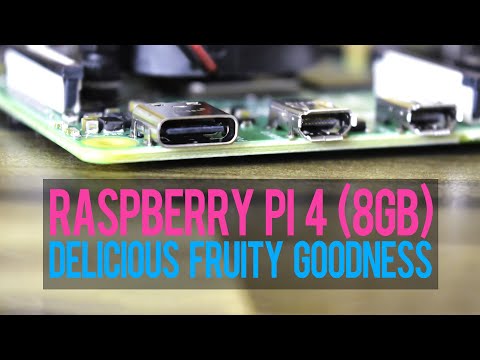
Raspberry Pi 4 Computer Model B 8GB Single Board Computer Review
Introduction
The DIY hardware movement is undergoing a massive renaissance. Driven by a desire to resist big tech and reclaim digital sovereignty, developers and makers are building custom "cyberdecks"—highly personalized, offline-first computers housed inside vintage items, rugged cases, and even everyday purses. At the absolute center of this creative counter-culture sits the Raspberry Pi 4 Computer Model B 8GB Single Board Computer. As the most powerful variant in its lineup, this credit-card-sized board has transitioned from a simple hobbyist tool into the definitive standard for custom, decentralized computing builds.
Technical Breakdown
To understand why this board dominates the DIY space, we have to look at its impressive technical foundation. The heart of the system is a 1.5 GHz ARM Cortex-A72 quad-core processor. This CPU provides a substantial performance leap over previous generations, offering the raw computational power required to run modern Linux distributions, compile code locally, and handle multitasking without stuttering.
A major bottleneck for single-board computers has historically been memory, but this model features a massive 8GB RAM configuration. This abundance of memory completely changes the user experience, allowing you to run memory-intensive development tools, local databases, and multiple browser tabs simultaneously.
For workspace flexibility, the board supports dual-display support up to 4K resolution. This allows developers to drive a dual-monitor setup directly from the Pi, drastically increasing screen real estate for debugging, writing code, and viewing documentation side-by-side.
Connectivity is equally robust. The board features Gigabit Ethernet, dual-band 2.4/5.0 GHz wireless LAN, and Bluetooth 5.0. This ensures ultra-fast wired networking for home servers, reliable wireless connectivity for portable builds, and seamless integration with wireless peripherals like mechanical keyboards and mice.
Finally, peripheral expansion is handled by 2 USB 3.0 ports and 2 USB 2.0 ports. The inclusion of USB 3.0 allows for high-speed data transfer to external solid-state drives (SSDs), which is crucial for anyone looking to bypass slow microSD card speeds for their primary operating system drive.
The Developer Perspective
For software engineers and system administrators, the Raspberry Pi 4 (8GB) is a highly capable, low-power Linux workstation. The 8GB of RAM is the true game-changer here, enabling developers to run local Docker containers, Kubernetes nodes (K3s), and lightweight IDEs directly on the metal. It serves as an excellent sandbox environment for testing ARM64 builds without cluttering your primary machine.
In the context of the cyberdeck and DIY community, this board is the ultimate engine. Its compact footprint and rich GPIO connectivity allow it to interface with custom keyboards, battery management systems, and unique display form factors. While specific battery life and power consumption metrics are not provided in current documentation—as they depend heavily on your custom power delivery setup—the board's efficiency makes it highly viable for long-duration, portable usage in the field. It empowers developers to build truly independent, secure, and highly customized technical workspaces.
Final Verdict
The Raspberry Pi 4 Computer Model B 8GB Single Board Computer remains the undisputed champion of the maker world. By packing desktop-class processing, dual-4K display capabilities, and generous memory into a tiny form factor, it provides unmatched value. Whether you are building a custom cyberdeck to take your workflow off the grid, or simply need a silent, power-efficient home server, this board is an essential tool for any modern developer's toolkit.
🛒 Ready to Upgrade Your Setup?
👉 Click Here to Check the Current Price on Amazon
*As an Amazon Associate, I earn from qualifying purchases. This helps support our tech reviews at no extra cost to you.*



댓글 없음:
댓글 쓰기