1. Introduction: Market Expectations and Genre Paradigm
Frontier Developments has long carved out a specialized niche within the park management simulation genre by pairing acclaimed intellectual properties with robust 3D rendering engines. The Jurassic World Evolution franchise, in particular, established its identity on the synthesis of prehistoric paleontology and theme park management logistics. However, the developer’s persistent post-launch DLC roadmap and content fragmentation strategies have gradually induced player fatigue, stretching the community's goodwill to its breaking point.
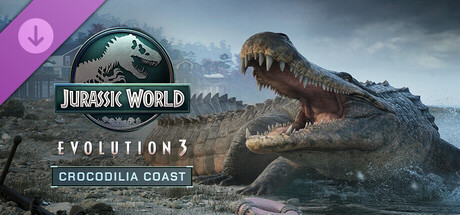
The release of the 'Crocodilia Coast' DLC was initially positioned to fulfill a long-standing demand within the community: the inclusion of prehistoric crocodilians and specialized wetland fauna. Prominently featuring the massive semi-aquatic apex predator Deinosuchus, the expansion held the promise of revitalizing enclosure design and ecosystem management mechanics. Regrettably, upon dissecting its gameplay loop and price-to-content ratio, the pack reveals itself as a stark emblem of Frontier's diminishing returns in live-service monetization, relying on asset recycling at an unacceptable price point.
2. Gameplay Architecture: Core Loop and Mechanical Innovation
At the center of this pack is the Deinosuchus, an addition that undeniably showcases high-tier mechanical execution and custom skeletal animation rigging. Its semi-aquatic behavioral routines, dynamic ambush hunting sequences, and iconic 'Death Roll' interactions introduce a much-needed layer of spectacle to exhibit design. The creature's interaction with deep water terrain tools and specialized feeding stations temporarily revitalizes the core park management loop, presenting unique variables for panic mechanics and enclosure security ratings.
However, beyond this flagship species, the DLC’s structural integrity rapidly degrades. The remaining roster reveals severe systemic shortcuts, relying heavily on recycled asset architecture and reskinned models. Species variants such as the modified Shonisaurus and Styxosaurus lineages offer virtually zero mechanical novelty, lacking unique behavior trees or meaningful integration into the park's ecosystem progression. Furthermore, the inclusion of North American fishing-village scenery pieces and 3D typography items operates as superficial cosmetic fluff, failing to inject any meaningful strategic depth into park management, guest flow mechanics, or economic balancing systems.
When evaluating the core gameplay loop, the DLC fails to expand the macro-level simulation. Players are essentially paying a premium for a single fully realized creature and a handful of re-textured assets that do not alter the fundamental management paradigms established in the base game.
3. Visual Architecture, Soundscape, and Optimization Engineering
From a visual standpoint, Frontier's proprietary Cobra Engine continues to deliver commendable fidelity. The micro-surface details on the Deinosuchus—from osteoderm texture maps to realistic hydrodynamic water interaction shaders—are rendered with high precision. Wetness maps respond accurately to dynamic lighting, and ambient occlusion beneath swamp canopies creates a convincing atmosphere for specialized wetland enclosures.
The audio architecture similarly demonstrates strong engineering. The low-frequency guttural roars of the crocodilians push subwoofer thresholds effectively, while sound transitions between terrestrial and underwater camera perspectives are handled seamlessly. However, technical flaws mar the experience. Deep water terraforming scripts occasionally trigger severe frame-rate drops, and simultaneous execution of complex aquatic hunting animations induces noticeable micro-stuttering. These technical bottlenecks, combined with unoptimized UI scaling during large-scale park builds, hamper the cinematic presentation of the simulation.
4. Global Community Sentiment and Final Verdict
An empirical analysis of global player sentiment across major gaming platforms reveals widespread dissatisfaction. While the mechanical craftsmanship of the Deinosuchus is universally acknowledged, the community's feedback is overwhelmingly negative regarding the unprecedentedly inflated price point ($14.99 USD / 16,500 KRW) relative to the sheer scarcity of new content. Players heavily criticize Frontier for shifting core development bandwidth to other flagship IPs while subjecting the Jurassic World Evolution player base to aggressive monetization consisting of recycled assets and bare-bones cosmetic additions.
In summary, the 'Crocodilia Coast' DLC stands as a deeply flawed expansion that relies on a single standout creature to justify an exorbitant price tag. Despite the technical prowess behind the Deinosuchus, the reliance on reskinned models and a complete absence of structural management depth render this pack an unsustainable value proposition. Frontier Developments must re-evaluate its content monetization strategy, prioritizing genuine mechanical innovation over fragmented asset packages if it hopes to retain the trust of its dedicated simulation audience.
Final Master Score: 5.5 / 10 (Mediocre)
👉 View on Steam


댓글 없음:
댓글 쓰기