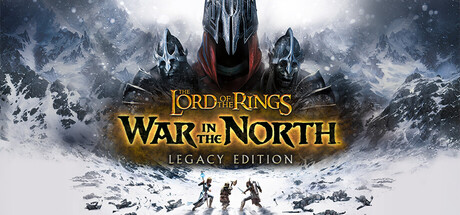
1. Introduction: Historical Paradigm and Market Expectations
Originally unleashed in 2011, The Lord of the Rings: War in the North stood as the swan song of Snowblind Studios—a venerable development house celebrated for codifying the hack-and-slash action-RPG genre through masterpieces such as Baldur's Gate: Dark Alliance and Champions of Norrath. Launching amidst the seismic paradigm shift ushered in by The Elder Scrolls V: Skyrim, the title was unfairly overshadowed and subsequently plunged into digital limbo following the expiration of its licensing rights. Its sudden, unannounced shadow drop as the 'Legacy Edition' represents an unexpected resurrection. By unearthing the brutal, unsung northern theater of the War of the Ring running parallel to the Fellowship's southern trek, this re-release revitalizes a starved community yearning for the revival of classic Middle-earth interactive media, sparking renewed demand for the restoration of gems like The Battle for Middle-Earth and Conquest.
2. Gameplay Mechanics: Core Loop and Proving Originality
At its mechanical core, the game revolves around a 3-player asymmetric cooperative gameplay loop driven by weighty, visceral hack-and-slash combat. Players step into the specialized roles of Eradan (the Dúnedain Ranger), Farin (the Champion of Erebor), and Andriel (the Lore-master of Rivendell). Rather than offering mere aesthetic divergences, the design enforces systemic synergy: each archetype commands unique world-interaction capabilities (discovering dwarf wall fissures, ranger tracks, or alchemical ingredients) and distinct combat doctrines (ranged sniping, sanctuary warding/buffing, and heavy crowd-control melee cleaves).
The centerpiece of the mechanical architecture is the 'Hero Mode' and its accompanying visceral execution system. Executing timed combos, parries, and responsive dodges triggers cinematic limb severing and decapitations, carving out an uncompromising, mature-rated action identity rarely witnessed in Tolkien adaptations. The tactical resource mechanic of summoning Beleram the Great Eagle provides substantial spatial control during high-intensity skirmishes. Crucially, the Legacy Edition resolves one of the legacy release's most egregious UX bottlenecks by eliminating the restrictive single-shared inventory architecture, implementing independent character inventory systems that drastically streamline loot distribution and build progression.
3. Visual Architecture, Soundscape, and Optimization Engineering
Visually, the Legacy Edition operates as a faithful upscaled preservation of its original Unreal Engine 3 framework rather than a ground-up remake. While environmental geometry across the desolate ruins of Fornost and the frozen crags of Mount Gundabad displays its seventh-generation console lineage, the dark fantasy aesthetic remains remarkably cohesive. Modernized native resolution scaling, upgraded lighting pipelines, and polished anti-aliasing effectively eliminate the muddy post-processing artifacts that plagued the 2011 release.
The audio engineering remains stellar. Inon Zur's thunderous orchestral compositions imbue every encounter with epic solemnity, seamlessly bridging sweeping cinematic brass with thunderous percussion. Sound effects—from the wet slicing of orc flesh to the heavy resonance of dwarven warhammers—deliver immense kinetic feedback. From an optimization standpoint, frame pacing is rock-solid across modern hardware configurations. Nonetheless, rigid transition animations and archaic collision detection quirks serve as persistent reminders that this is an operational remaster rather than a mechanical overhaul.
4. Global User Sentiment Analysis and Final Master Verdict
Community reception reveals a bifurcated consensus. The vast majority of players celebrate the aggressive, budget-friendly $18 price point, the preservation of an otherwise lost piece of Tolkien gaming history, and the vital quality-of-life adjustments to inventory mechanics. The raw, tactile joy of local and online three-player co-op hack-and-slash action continues to resonate profoundly with both dedicated Tolkien enthusiasts and nostalgic RPG veterans.
Conversely, a critical network stability flaw severely dampens the reception. Multiple community reports highlight a persistent, game-breaking multiplayer progression synchronization bug wherein non-host players suffer catastrophic data loss, wiping hard-earned gear, skill allocations, and progression levels upon session termination. In a game anchored explicitly to cooperative progression, such netcode fragility is an undeniable structural defect. In conclusion, The Lord of the Rings: War in the North™ - Legacy Edition triumphs as a welcome restoration of an exceptional, mature co-op action RPG, but stands as an imperfect resurgence until comprehensive post-launch hotfixes rectify its multiplayer integrity.
Final Master Score: 7.8 / 10
👉 View on Steam


댓글 없음:
댓글 쓰기