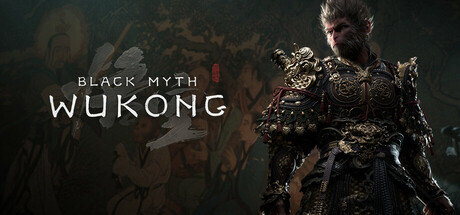
1. Introduction: Historical Paradigm and Market Expectations
When Game Science unveiled its initial 13-minute gameplay trailer for 'Black Myth: Wukong' in August 2020, it sent shockwaves through the global video game industry. Reimagining the classic 16th-century Chinese novel Journey to the West as a dark, visceral action RPG, the game represented a monumental entry from an East Asian studio into the high-budget AAA single-player market traditionally dominated by Western and Japanese juggernauts. In a regional ecosystem heavily skewed toward mobile Gacha and live-service models, investing high-level engineering into a single-player narrative action title was viewed as a massive gamble. Yet, despite initial industry skepticism regarding the studio's technical capacity, the game arrived as one of the most anticipated titles of the decade, serving as a critical litmus test for the globalization of non-Western AAA game development.
2. Gameplay Mechanics: Core Loop and Proof of Originality
The core gameplay loop of Black Myth: Wukong sits elegantly between the punishment-heavy cadence of Soulslikes and the fluid, combo-driven mechanics of traditional character action games. Playing as the 'Destined One,' players navigate combat using three distinct staff stances: Smash Stance, Pillar Stance, and Thrust Stance. Rather than relying on traditional stamina-gated defense, the mechanical framework centers around dynamic dodge mechanics that build 'Focus Points.' This resource management system forces players into a high-stakes rhythm: perfectly timing dodges to charge Focus, which is then expended in heavy finishing attacks that stagger opponents and disrupt boss attack patterns.
Complementing the physical combat is a robust Spell architecture featuring abilities like Immobilize, Ring of Fire, and A Pluck of Many, alongside a Spirit transformation mechanic. This system grants substantial tactical adaptability, allowing players to theory-craft specialized builds to counter specific boss behaviors. However, the game's structural progression relies heavily on a dense 'Boss Rush' framework. While offering over 80 unique encounters, this emphasis comes at the expense of level design depth. The world is constrained by intrusive invisible walls and static navigation cues, creating a UX/UI bottleneck where environmental exploration feels under-designed compared to the meticulously crafted boss arenas.
3. Visual Architecture, Soundscape, and Optimization Engineering
Graphically, Black Myth: Wukong stands as a technical tour de force powered by Unreal Engine 5. Utilizing Nanite's virtualized micro-polygon geometry and Lumen's real-time global illumination, Game Science has rendered breathtaking environments inspired by real-world Chinese heritage sites, ancient temples, and Buddhist sculptures scanned via 3D photogrammetry. The atmospheric fidelity—from dynamic weather transitions to intricate particle effects during spell execution—establishes a new visual benchmark for fantasy action RPGs.
The audio design works in tandem with the visual presentation to heighten immersion. Traditional Asian instrumentation, including the pipa and erhu, is seamlessly woven into high-tempo orchestral scores that adapt dynamically to combat states. From an engineering standpoint, the title leverages advanced upscaling technologies including DLSS 3.5 and FSR 3.0 alongside Frame Generation to maintain fluid framerates on modern hardware. Nevertheless, optimization hiccups remain evident. Frame pacing instability, VRAM spikes, and transient shader compilation stutters occur during resource-intensive encounters involving heavy alpha effects and destructible environmental assets, indicating areas where final technical polish falls slightly short.
4. Global Community Sentiment Analysis and Final Verdict
Global community sentiment regarding Black Myth: Wukong reflects widespread acclaim paired with nuanced mechanical criticism. Core action enthusiasts universally praise the astounding variety of boss mechanics, the satisfying weight of the staff-based combat loop, and the narrative depth embedded in New Game Plus progression and secret boss lines. Players routinely highlight the triumph of translating complex mythological lore into an engaging, high-end interactive medium.
Conversely, critical discourse highlights the linearity of the environment design, the overuse of invisible boundaries, and notable pacing spikes across chapters. Yet, these structural flaws fail to eclipse the game's extraordinary achievements. Black Myth: Wukong is a landmark achievement—a triumphant convergence of mythological storytelling and cutting-edge real-time graphics. Game Science has not only delivered a top-tier action RPG capable of standing alongside the genre's best, but has also fundamentally reshaped the global gaming landscape by proving that Asian developer studios can set new standards for AAA excellence.
👉 View on Steam


댓글 없음:
댓글 쓰기