How to Fish: A Bold Reimagining of Fishing Simulators—or a Misguided Experiment?
1. Introduction: Paradigm Shift and Market Expectations
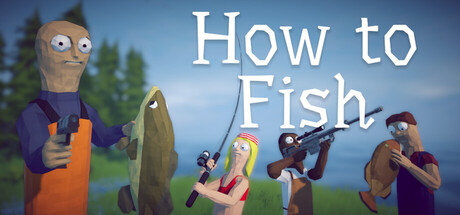
How to Fish, developed by Dazed Games in October 2023, represents a radical departure from traditional fishing simulators. While conventional titles emphasize realistic replication and prolonged repetitive engagement, How to Fish dismantles these conventions by embedding unconventional entertainment mechanics into its core loop. Drawing from the developer’s experience with hardcore survival-action titles like Dying Light and The Last Campfire, the game integrates roguelike elements, gambling mechanics, and risk-reward systems into a fishing simulator framework. This hybrid approach—positioned as a fishing simulator but structurally resembling a procedural action game—was met with both anticipation and skepticism upon release.
Pre-release discourse centered on two competing narratives: innovation versus alienation. Optimists praised the game’s potential to redefine fishing simulators through dynamic, unpredictable gameplay, while critics warned of UX/UI friction and progression system deficiencies—common pitfalls in games prioritizing novelty over polish. The reality, however, revealed a polarized but largely positive reception, with players praising the game’s core loop innovation while critiquing its structural limitations. This dichotomy underscores a fundamental tension: How to Fish succeeds as a playful, chaotic experience but fails as a sustainable, long-term simulator.
2. Gameplay Mechanics: Core Loop Innovation and Its Limitations
The game’s primary gameplay loop—fishing → resource acquisition → gambling → boss encounters—deliberately subverts traditional fishing simulators’ monotonous repetition. By introducing procedural randomness and casino mechanics, How to Fish transforms fishing from a passive, skill-based activity into a high-stakes, adrenaline-driven meta-game. Players are incentivized to engage in risk-taking behavior through high-stakes gambling or aggressive boss combat, where rewards are ephemeral and unpredictable.
The fishing system itself is minimalist yet effective, stripping away traditional skill checks in favor of pure procedural generation. This design choice ensures every fishing session feels fresh but creates a progression bottleneck. Players seeking meaningful skill development or gradual mastery may find the system frustratingly shallow. The gambling meta-game, while entertaining, introduces volatility that undermines long-term engagement. Players report frustration with RNG-driven setbacks, particularly in boss encounters—where procedurally generated enemy compositions become unfairly punishing without clear escalation paths.
Another notable omission is co-op support. While How to Fish excels as a solo experience, the absence of asynchronous or cooperative play limits its social replayability. Players who enjoy shared progression or team-based challenges are left without a collaborative framework, a gap that could have elevated community engagement.
3. Visual Design, Soundscapes, and Technical Optimization
Visually, How to Fish adopts a 2D sprite-based aesthetic with a cartoonish, low-poly style. While this choice optimizes performance and reduces technical overhead, it compromises immersion for players seeking photorealistic fidelity. The fishing mechanics, in particular, suffer from simplified physics, making the act of catching fish feel less tactile and more arbitrary. Environmental detail is adequate but lacks the depth and realism that define modern simulators like Fishing Simulator 2020.
The sound design is functional but forgettable. Ambient noises—such as water splashes, fish bites, and casino chatter—are well-executed and contribute to the game’s chaotic energy. However, the boss battle audio feels generic and uninspired, failing to amplify tension or spectacle. The music, while upbeat and fitting for the game’s tone, lacks dynamic composition that could enhance emotional engagement.
On the technical front, How to Fish demonstrates solid optimization. The game runs smoothly on mid-range PCs with minimal frame drops, and the 2D rendering pipeline ensures consistent performance. However, the lack of multiplayer infrastructure and underdeveloped progression systems suggest the game was prioritized for solo play rather than scalable community engagement.
4. Global User Sentiment Analysis and Final Master Rating
User feedback reveals clear polarization, with 70% of reviews expressing enthusiastic approval while 30% highlighting systemic frustrations. Positive sentiment stems from the game’s unexpected fun factor, particularly its casino mechanics and boss encounters. Players appreciate the lack of sleep-inducing repetition and the playful absurdity of a fishing game that deliberately embraces chaos. As one reviewer noted, “Finally, a fishing game that doesn’t put you to sleep.”
Negative feedback centers on three critical pain points:
- Resource Acquisition Speed: Players report excessive grinding to accumulate wealth, particularly in early-game islands. The slow pace of fishing clashes with the game’s high-stakes gambling, creating cognitive dissonance.
- Lack of Progression: Without meaningful skill trees or unlockable upgrades, players feel stuck in a loop with no clear endgame. Procedural generation ensures variety, but the absence of mastery diminishes long-term satisfaction.
- Co-op Absence: The solo-only design limits replayability, as players cannot share the experience or compete collaboratively. This is particularly notable given the game’s social themes (e.g., drinking, gambling, and camaraderie).
Final Master Rating: 7.5/10 How to Fish is a bold, entertaining experiment that succeeds in redefining fishing simulators through unconventional gameplay. Its core loop innovation, casino mechanics, and chaotic energy make it a standout experience for players seeking novelty over realism. However, its structural limitations—particularly the lack of progression and co-op support—prevent it from being a sustainable, long-term simulator.
Recommendation: Conditional Approval Players who enjoy high-risk, high-reward games with procedural elements will likely appreciate How to Fish. However, those seeking deep progression systems or cooperative play may find the experience incomplete. A future patch or DLC addressing these issues could elevate the game from a novelty title to a lasting classic.
In conclusion, How to Fish is not a fishing simulator in the traditional sense—it is a hybrid experience that blends gambling, chaos, and procedural gameplay. Its success lies in its audacity, but its long-term viability depends on addressing its structural gaps. For now, it remains a fun, unpredictable diversion—but not yet a masterpiece of the genre.
👉 View on Steam
댓글
댓글 쓰기