Bodycam: A Radical Experiment in Hyper-Realistic FPS Design—Where Technical Vision Collides with Structural Flaws
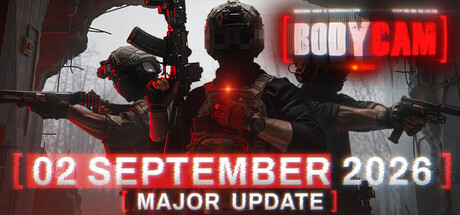
1. Introduction: The Paradigm Shift and Market Expectations
Released in the second half of 2024, Bodycam, developed by brothers Luca and Leo Dassier, represents a bold assertion within the first-person shooter genre—a game that doesn’t merely aspire to realism but demands it through technical audacity. Leveraging Unreal Engine 5, the title implements neurological stress modeling and advanced physics simulations to achieve an unprecedented level of realism. This represents a rare instance where self-taught developers have successfully redefined genre conventions, challenging AAA studios to reconsider their approach to player immersion.
The market response to Bodycam has been overwhelmingly positive yet critical. Critics and players alike acknowledge its unprecedented technical depth, particularly in stress-based combat mechanics and biomechanical response systems, which create a psychological tension structure fundamentally distinct from traditional FPS titles like Call of Duty or Battlefield. However, the absence of offline modes, mod support, and customizable loadouts raises significant concerns about the game’s long-term viability and player retention.
The Dassier brothers’ journey—from self-taught programmers to technical visionaries—adds a layer of intrigue. Their ability to reverse-engineer human physiology into gameplay mechanics demonstrates extraordinary passion, but it also highlights the structural limitations inherent in a solo-developed title attempting to redefine an entire genre.
2. Gameplay Mechanics: The Core Loop and Proof of Innovation
Bodycam's primary gameplay loop centers on stress-induced degradation, where prolonged exposure to combat scenarios triggers cognitive and physiological fatigue. This isn’t merely a tactical mechanic—it’s a psychological simulation that alters heart rate, breath patterns, and peripheral vision while deteriorating reflexes and weapon handling. The system brilliantly creates tension but punishes inexperience, resulting in a steep learning curve that may alienate casual players.
The physics engine stands as the game’s most defining feature. Every bullet impact realistically deforms flesh, blood splatter adheres to surfaces via fluid dynamics, and ragdoll physics ensure enemies collapse in viscerally realistic ways. Even the drone flight model—with its unpredictable aerodynamics—adds a layer of unscripted realism rarely attempted in mainstream titles. However, this hyper-detailed simulation comes at a cost: frame rate instability during intense combat, particularly on mid-range hardware.
The game’s structural weaknesses manifest in its progression and replayability systems. The absence of customizable loadouts forces players into rigid combat strategies, eliminating tactical depth. Meanwhile, the map variety is severely limited, restricting the meta-game and accelerating player fatigue. The lobby system further suffers from connection issues, including host-kicking loops and mid-match disconnections, undermining the game’s multiplayer stability.
Despite these flaws, the core combat loop remains immersive and tense. The neurological feedback is unmatched in its fidelity, and the physicality of gunplay—where every shot feels weighted and consequential—distinguishes Bodycam from conventional shooters. However, without meaningful customization or progression incentives, the game risks rapid player burnout.
3. Visual Architecture, Sound Design, and Technical Optimization
Visually, Bodycam is a masterclass in Unreal Engine 5, utilizing ray-traced lighting, Nanite-level detail, and dynamic cloth physics to create living, reactive environments. The blood splatter and tissue deformation are graphically stunning, though they occasionally overwhelm frame rates during chaotic gunfights. Character models exhibit hyper-realistic details, including subsurface scattering and wrinkle mapping, making even minor injuries visually impactful.
The sound design complements the visuals with 3D spatial audio, making gunfire, footsteps, and breathing feel spatially immersive. Stress-related audio cues—such as elevated heart rate sounds—enhance psychological immersion, transforming the experience into a first-person simulation. However, the absence of ambient music in favor of diegetic soundscapes can feel claustrophobic in open environments.
Technical optimization emerges as the game’s primary weakness. Bodycam demands high-end hardware to maintain smooth performance, with consistent frame drops on mid-tier PCs during intense combat. The server infrastructure also frequently fails, resulting in disconnections and host-kicking issues. While the Unreal Engine 5 foundation enables graphical brilliance, the performance trade-offs are noticeable, particularly in multiplayer matches.
The lack of offline modes and mod support further limits accessibility. Many players express frustration over the absence of single-player campaigns, which would have enhanced narrative depth. Instead, players are confined to repetitive multiplayer matches, which quickly lose appeal without meaningful variety.
4. Global User Sentiment Analysis and Final Verdict
User feedback for Bodycam is overwhelmingly positive regarding its technical achievement, but deeply critical of its structural limitations. Reviewers consistently praise the hyper-realistic physics, stress mechanics, and immersive sound design, describing it as “the most realistic FPS ever made”. However, the lack of customization, poor map variety, and server instability are universally cited as dealbreakers.
The most frequent complaint is the absence of loadout options, which forces players into rigid combat strategies lacking tactical depth. The lobby system’s unreliability—with players frequently kicked from matches and forced to rejoin—undermines trust in the game’s multiplayer infrastructure.
Despite these flaws, the core experience remains compelling. Players who adapt to the stress mechanics find themselves fully immersed in a viscerally realistic shooter. The technical vision of the Dassier brothers is undeniable, pushing boundaries in ways few titles dare.
Final Verdict: 8.5/10—Bodycam is a technical marvel that redefines realism in FPS design, but its structural flaws—particularly in progression, customization, and server stability—limit its longevity. With meaningful updates, including offline modes, mod support, and expanded map variety, this could evolve into a cult classic. As it stands, it remains a flawed yet brilliant experiment in hyper-realistic gameplay.
👉 View on Steam

댓글
댓글 쓰기