1. Introduction: Historical Paradigm and Market Expectations
The golden era of early 2000s isometric MMORPGs, spearheaded by legendary titles such as Ragnarok Online, left an indelible mark on the collective consciousness of global gamers. Over the years, the stagnation and questionable monetization strategies of legacy IP holders created a profound void in the market, leaving fans yearning for a spiritual successor that could capture the magic of classic 2.5D sprite-based adventures while shedding archaic design flaws. Enter SpiritVale, an indie title positioning itself directly at this intersection of nostalgia and modernization. The anticipation surrounding its release was fueled by a community eager to relive the cozy, community-driven grinding experience of yesteryear, albeit with the polished quality-of-life features expected of contemporary game design. SpiritVale attempts to bridge this generational gap, promising a sanctuary for displaced veterans of the genre.
2. Gameplay Mechanics: Core Loop and Proof of Originality
At its mechanical core, SpiritVale operates on a highly traditional gameplay loop centered on zone-based mob grinding and character progression. The developer's most commendable achievement lies in a proactive approach to mitigating the notorious UX/UI bottlenecks that plagued classic MMORPGs. In a departure from archaic design tropes, SpiritVale introduces a completely free stat and skill respec system. This mechanical flexibility empowers players to experiment with diverse builds without the fear of bricking their characters—a common frustration in older titles. Furthermore, the integration of teleportation portals across almost every map drastically reduces tedious traversal times, respecting the player's time in a way that early 2000s games never did.
However, beneath these welcome quality-of-life enhancements lies a severe structural deficit. SpiritVale suffers from an acute lack of narrative architecture and quest design. The progression system is stripped of any meaningful context; there are no overarching questlines, lore-driven objectives, or dynamic world events to guide the player. The core loop is reduced to a sterile cycle of moving from one zone to the next, grinding mobs for experience points, and repeating the process. The skill system, while functional, lacks tactical depth and originality, relying on basic, uninspired abilities that have been standard in the genre for three decades. Without robust meta-gameplay or engaging combat mechanics, the gameplay quickly devolves into a monotonous chore, failing to sustain long-term cognitive engagement.
3. Visual Architecture, Soundscape, and Optimization Engineering
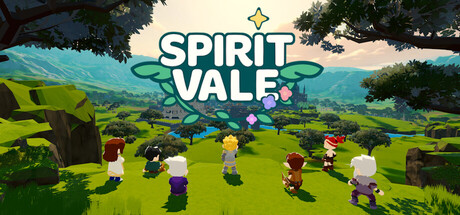
Visually, SpiritVale embraces a charming 2.5D isometric pixel art style that serves as a direct love letter to the classic era. The character sprites and environmental assets evoke a warm, nostalgic aesthetic that is highly effective in establishing a cozy, relaxed atmosphere. This visual direction is complemented by a serene, melodic soundscape that enhances the game's laid-back, 'chill' vibe, making the initial hours of exploration feel genuinely comforting. From a technical optimization standpoint, the game is remarkably stable. The engine runs flawlessly with consistent frame rates, and the server infrastructure handles player loads without significant latency or connectivity issues. The absence of game-breaking bugs or technical friction is a testament to the developer's diligent QA process during the playtest phases.
Nevertheless, the visual presentation is not without its flaws. While the pixel art is endearing, the user interface and overall layout feel somewhat dated, occasionally resembling low-budget web browser games or social media titles from a bygone era rather than a premium retro-inspired release. The environmental design also suffers from a lack of asset density, leaving many zones feeling barren and visually repetitive. This lack of visual variety further exacerbates the feeling of emptiness that permeates the entire gameplay experience.
4. Global User Sentiment Analysis and Final Master Verdict
An analysis of global user feedback reveals a highly polarized community. On one side of the spectrum, nostalgic players praise SpiritVale for successfully capturing the essence of Ragnarok Online while introducing vital modern conveniences like free respecs and fast travel. For these players, the game serves as a cozy, low-stress grinding haven. On the opposing side, critical voices condemn the game as an empty shell, citing the complete absence of story, oversimplified mechanics, and a repetitive loop that offers no real sense of achievement. Concerns regarding pay-to-win (P2W) elements and an over-reliance on AFK-style progression further alienate players seeking a deep, skill-based MMORPG experience.
Ultimately, SpiritVale is a title defined by its compromises. It succeeds in delivering a nostalgic, technically stable trip down memory lane, but fails to establish a compelling, modern gameplay loop that can stand on its own merits. By stripping away the narrative framework and mechanical depth of the genre, it risks being perceived as a shallow grinding simulator rather than a true evolution of the classic MMORPG. For die-hard fans of old-school grinding, it offers a pleasant, short-term distraction; for the broader gaming public, it lacks the substance required for long-term investment. SpiritVale receives a final score of 6.0 out of 10.
👉 View on Steam




댓글 없음:
댓글 쓰기