1. Introduction: Paradigm Shifts and Market Expectations
The visionary developers who once carved out a unique genre-defining territory with cooperative-only masterpieces have finally returned with their highly anticipated new title, 'Split Fiction.' Having masterfully demonstrated the profound narrative and mechanical synergy that occurs when two players synchronize their actions in 'It Takes Two' and 'A Way Out,' the studio now seeks to push the cooperative gaming paradigm into uncharted territory. Prior to its release, the global gaming community engaged in fierce debates over whether the monumental success of their previous works would cast an inescapable shadow over this new venture, or if it would serve as a powerful catalyst for further creative breakthroughs. 'Split Fiction' arrived on the scene not merely as a standard sequel, but as a definitive litmus test for the boundaries and future potential of local and online co-op experiences—a genre that has been increasingly sidelined in the modern AAA landscape. With the industry watching closely, the spotlight fell on how the developers' signature blend of whimsical storytelling, sharp directorial flair, and deep mechanical integration would manifest on the split screen, drawing intense anticipation from gamers worldwide who hunger for genuine shared experiences.
2. Gameplay Mechanics: The Core Loop and Proof of Originality
At the heart of 'Split Fiction' lies a gameplay loop driven by dynamic spatial division and fluid role-shifting between players. The game boldly dismantles the traditional constraints of static split-screen design, introducing a fluid system where the screen dynamically merges, splits, and shifts in real-time to present complex spatial and visual puzzles. This constant manipulation of the screen space forces players to share information while navigating distinct environments, creating a compelling cognitive asymmetry that demands constant communication and absolute trust. The level design, which effortlessly transitions between high-concept science fiction and whimsical fantasy, showcases the studio's unparalleled creative genius. Whether players are utilizing intricate shapeshifting mechanics to bypass gravity-defying obstacles or engaging in high-octane aerial combat on the backs of majestic dragons, each chapter introduces entirely new gameplay systems, ensuring that monotony never sets in. Every stage is not just a visual backdrop but a playground with its own unique interactive rules. However, this relentless pursuit of mechanical variety occasionally comes at the cost of depth, sometimes making the gameplay feel like a rapid succession of fleeting gimmicks rather than a cohesive, deeply developed system. Furthermore, the game inherits the inherent barrier of the co-op genre, where the overall quality of the experience is heavily dependent on the skill, patience, and synergy of one's partner, making the choice of co-op companion the ultimate variable in determining enjoyment.
3. Visual Architecture, Soundscape, and Optimization Engineering
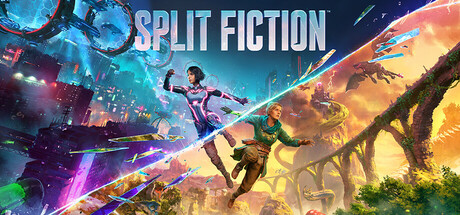
From a visual standpoint, 'Split Fiction' achieves a striking aesthetic dichotomy, juxtaposing vibrant fairy-tale wonder with cold, sterile futuristic landscapes. The fantasy segments are a visual triumph, boasting rich color palettes, warm lighting, and meticulously detailed environments that evoke a sense of childlike wonder. In contrast, some of the sci-fi levels feel comparatively bland and uninspired, presenting a noticeable imbalance in artistic execution across different chapters. Nevertheless, the technical execution of transitioning between these disparate worlds on a single screen is nothing short of remarkable. The soundscape dynamically mirrors these visual shifts, blending sweeping orchestral arrangements with sharp electronic beats that adapt in real-time to the action on screen, thereby maximizing auditory immersion. On the technical front, minor performance hiccups are observable during moments of intense screen-splitting transitions or when the screen is flooded with complex particle effects. High-resolution setups occasionally suffer from micro-stuttering when the players' perspectives rapidly cross paths. However, the overall system stability and network synchronization are exceptionally robust, ensuring a smooth, uninterrupted flow that keeps the high-tempo adventure engaging from start to finish.
4. Global User Sentiment Analysis and the Definitive Verdict
Global player feedback highlights both the brilliant innovations and the narrative shortcomings of 'Split Fiction.' A vast majority of the community has showered the game with praise, celebrating its boundless creativity, relentless pacing, and inventive level design, with many declaring it one of the finest cooperative achievements in gaming history. It is widely lauded as the ultimate bonding experience for couples, friends, and families alike. Conversely, critical voices have pointed out a significant narrative deficit, citing unlikable character dynamics and a disjointed plot as major detractors. The protagonists' constant bickering and complaints can feel grating, occasionally alienating players and hindering emotional investment in an otherwise stellar journey. The somewhat simplistic and predictable narrative arc in the latter half of the game fails to match the sheer brilliance of its mechanical design, leaving a sense of missed potential when compared to the emotional resonance of 'It Takes Two.' Nonetheless, 'Split Fiction' remains a triumphant celebration of cooperative play, delivering a high-energy, imaginative adventure that demands to be experienced. It is a testament to the joy of shared gaming, proving that when two minds connect, the results can be truly magical. Our definitive verdict for this cooperative masterpiece is a highly recommended 8.5 / 10.
👉 View on Steam


댓글 없음:
댓글 쓰기